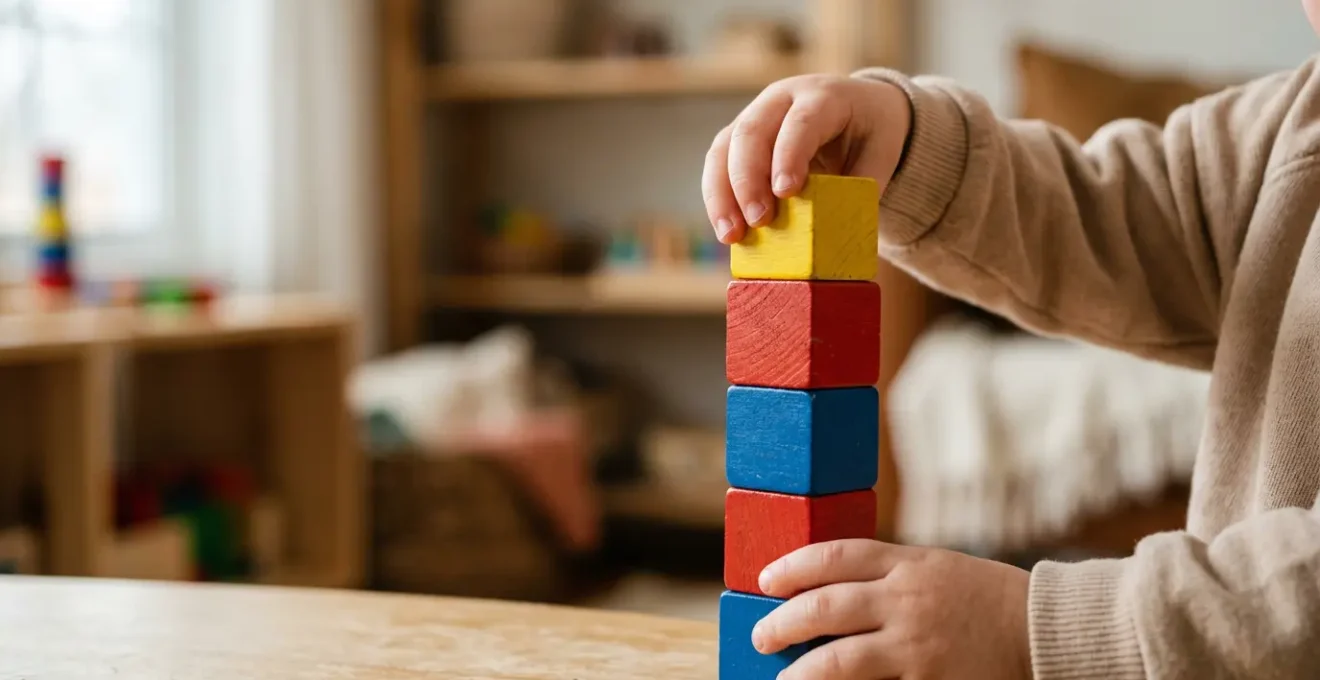
You don’t need expensive coding robots to teach your toddler computational thinking; the most powerful tools are likely already in their toy box.
- Classic toys like marble runs, blocks, and puzzles are natural environments for learning core coding skills like sequencing, debugging, and logic.
- The parent’s role is not to buy more tech, but to reframe screen-free play as a child’s first programming language.
Recommendation: Start by observing your child’s current play and learn to identify the « coding moments » in their everyday exploration—this guide shows you how.
As a parent, you’re constantly hearing about the importance of preparing your child for a tech-driven future. The pressure to introduce STEM and coding concepts earlier than ever is immense, leading to a market flooded with brightly-colored « coding robots » and educational apps promising to turn your toddler into a tiny programmer. But as an early years STEM educator, I can tell you a secret: the frantic push for more screen time might be missing the point entirely.
While these products have their place, they often focus on a very narrow definition of coding. They teach commands, but not necessarily the thinking behind them. But what if the true foundation of computational thinking—the logic, the problem-solving, the creativity—wasn’t found on a tablet, but in a pile of wooden blocks? What if your child is already running their first « code » when they figure out why their tower keeps falling over?
The truth is, coding isn’t a subject to be taught like memorizing letters. It’s a set of cognitive skills that can be nurtured through hands-on, tangible play. It’s about understanding cause and effect, recognizing patterns, and debugging errors. The key is not in the toy, but in the thinking the toy inspires. It’s about shifting our perspective from buying programming toys to seeing classic play as a child’s first programming language.
This guide will walk you through how to unlock these powerful learning moments. We will explore how timeless, screen-free toys are the perfect, age-appropriate tools for building a solid foundation in logic and science. By the end, you’ll see your child’s toy box not as a collection of objects, but as a coding sandbox full of potential.
Summary: STEM Toys for Toddlers: Unlocking Coding Concepts, No Screens Required
- Why Marble Runs Are the Ultimate Lesson in Gravity and Logic?
- How to Use Magnetic Tiles to Teach Geometry Shapes 3D?
- Simple Blocks or Engineering Kits: What Fits a 3-Year-Old’s Brain?
- The Marketing Mistake That Keeps Girls Away From Construction Toys
- When to Start Science Experiments: The Age of Wonder?
- Why 90% of the Play Should Come From the Child, Not the Toy?
- Why Sensory Input Before Age 3 Determines Brain Architecture?
- Logic Puzzles for Preschoolers: How to Teach Persistence When a Puzzle Is « Too Hard »?
Why Marble Runs Are the Ultimate Lesson in Gravity and Logic?
A marble run is far more than just a mesmerizing cascade of motion; it’s a dynamic physics lab in your living room. Every twist, drop, and turn is a hands-on experiment in cause and effect. As children construct their tracks, they are intuitively grappling with major scientific principles. In fact, research shows that marble runs transform complex physics concepts like acceleration, momentum, potential energy, and kinetic energy from abstract textbook ideas into tangible results they can see and feel.
But the most powerful coding lesson from a marble run happens when things go wrong. When a marble gets stuck, flies off the track, or loses momentum, the child’s natural instinct is to investigate. They’ll check the connections, adjust the slope of a ramp, or add a support to a wobbly tower. This process is a perfect, real-world analogue for a core programming skill: debugging. Instead of staring at lines of code, they are engaging in « physical debugging, » isolating the problem and testing solutions.
Case Study: Learning to Debug Through Play
When marbles get stuck or fly off track during marble run construction, children naturally engage in ‘debugging’ behavior—testing sections individually to isolate problems and find solutions. This mirrors core programming skills used by professional software developers, making marble runs an ideal bridge between physical play and computational thinking. A child who learns to patiently find the ‘bug’ in their marble track is building the exact same resilience and systematic thinking needed to later find a bug in a line of code.
By encouraging your child to « debug » their own creations, you are teaching them that problems are solvable and that testing is a natural part of the building process. You’re not just building a track for a marble; you’re building a resilient, logical problem-solver.
How to Use Magnetic Tiles to Teach Geometry Shapes 3D?
Magnetic tiles are a superstar in the world of STEM toys, and for good reason. Their ability to snap together allows children to move seamlessly from two dimensions to three, a transition that is fundamental to both engineering and computer graphics. The real magic happens when you introduce the concept of geometric nets—the flat, 2D pattern that can be folded to create a 3D shape. This is a high-level geometry concept made incredibly simple and intuitive through play.
As educators from the Perkins School for the Blind note in their teaching methodologies, this is a key learning moment. They explain that the process is about learning to « layout the tiles on a flat surface in order to create a 3D object. (Example: 4 squares and two triangles laid flat in a specific sequence can create a 3D house.) » This act of planning a 2D layout to achieve a 3D result is a powerful lesson in spatial reasoning and abstraction. It teaches children to think ahead and visualize the outcome of their actions, a critical skill in any form of design or programming.
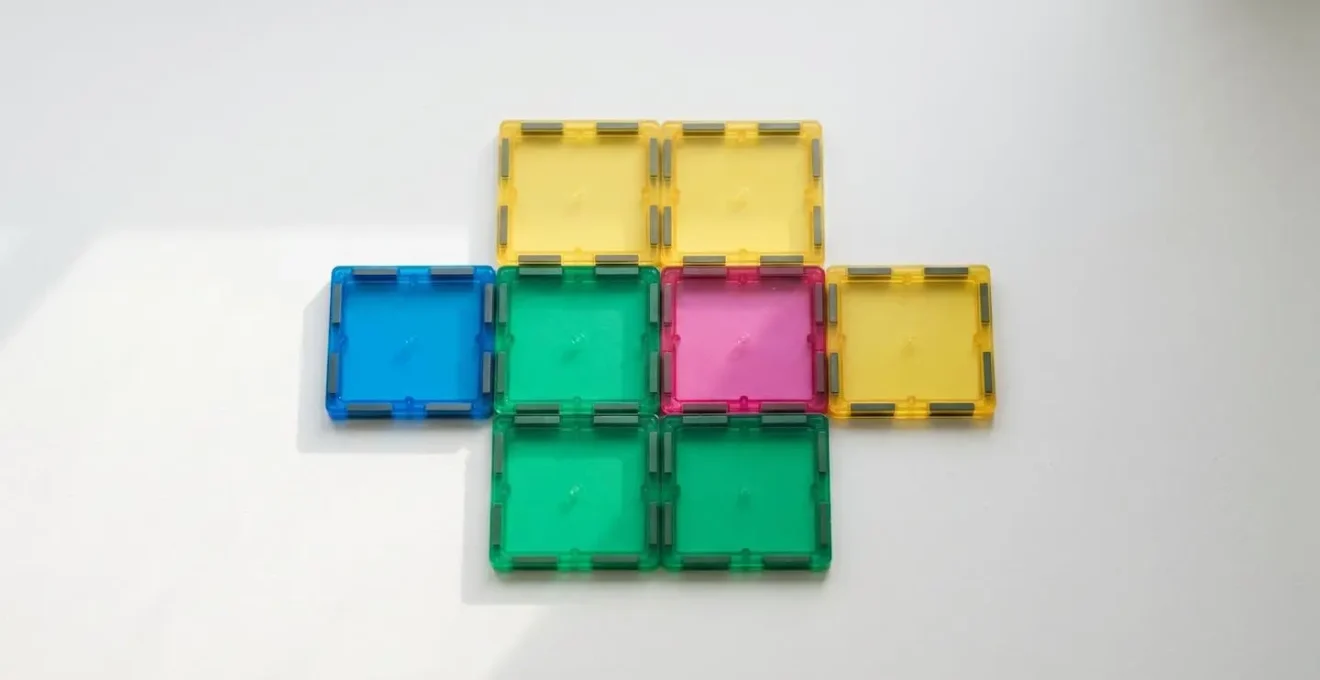
You can guide this discovery by asking simple questions. « What do you think will happen if we fold up all these sides? » or « How many squares do we need to make a cube? » By experimenting with these flat nets, children are not just building shapes; they are learning the underlying rules of geometry. They are discovering that a complex 3D object is just a collection of simple 2D shapes arranged in the right sequence—a foundational concept for everything from architecture to 3D modeling software.
Simple Blocks or Engineering Kits: What Fits a 3-Year-Old’s Brain?
In the rush to provide « advanced » learning, many parents are tempted to bypass simple wooden blocks in favor of complex engineering kits with instructions and a single « correct » outcome. While these kits have value for older children, they may actually limit the type of thinking a three-year-old’s brain is primed for. The key difference lies in two modes of thought: convergent and divergent thinking.
An engineering kit that requires a child to follow step-by-step instructions to build a specific model encourages convergent thinking: the process of finding a single, correct solution based on a set of rules. However, a simple pile of wooden blocks encourages divergent thinking: the flexible, creative exploration of multiple possible solutions to a problem that has no single right answer. For a developing brain, fostering this open-ended creativity is far more valuable.
Convergent thinking is what we practice when we reason according to strict rules or logical principles, usually in search of the one, ‘correct’ solution. By contrast, divergent thinking is more flexible, and appropriate for situations where there are multiple solutions to a problem.
– Parenting Science researchers, The benefits of toy blocks: The science of construction play
When a toddler builds with simple blocks, they are the architect, engineer, and programmer. They decide what to build, how to build it, and what to do when it collapses. There is no instruction manual telling them their lopsided tower is « wrong. » This freedom is where the real learning happens. They are developing hypotheses (« If I put this big block on top, will it stay? »), testing them, and learning from the results. This cycle of ideation, creation, and revision is the very essence of innovation.
The Marketing Mistake That Keeps Girls Away From Construction Toys
Despite progress, a stubborn bias persists in the world of toys. We instinctively know that construction and logic toys are for everyone, yet subtle (and not-so-subtle) cues often steer girls away. This isn’t just an anecdotal observation; a major study by the LEGO Group and the Geena Davis Institute on Gender in Media found that parents still more frequently encourage sons than daughters to engage in STEM-related play. The issue often starts with packaging and marketing, which creates a self-fulfilling prophecy about who these toys are « for. »
However, the problem is more nuanced than simply « pink-ifying » a science kit. The way a toy is presented can fundamentally change how a parent and child interact with it, which in turn affects the learning outcome. This phenomenon was revealed in a fascinating study on how packaging impacts the learning experience.
Case Study: The GoldieBlox vs. BobbyBlox Paradox
In a controlled study, researchers gave the exact same mechanical toy to mother-child pairs, but with different packaging: one version was girl-targeted (GoldieBlox) and the other boy-targeted (BobbyBlox). The results were surprising. Girls actually learned the mechanical principle of the toy better when playing with the « boy » version, while boys learned better from the « girl » version. The researchers discovered that the packaging influenced the mothers’ behavior: mothers with daughters focused more on the narrative story in the instructions, while mothers with sons jumped straight to the hands-on building. This shows that gendered marketing doesn’t just influence choice—it changes the entire teaching and learning dynamic.
This reveals a critical mistake in how we approach STEM for girls. By over-emphasizing narrative and characters in « girl-friendly » STEM toys, we may inadvertently be distracting from the core mechanical and spatial learning. The solution isn’t just about color palettes; it’s about presenting all construction toys as tools for building, problem-solving, and creative expression, equally accessible and engaging for all children.
When to Start Science Experiments: The Age of Wonder?
Parents often wonder when their child is « ready » for science. They picture lab coats and beakers, but the truth is, your toddler is already a scientist. The « Age of Wonder » begins the moment they start interacting with their world with curiosity. Every time they drop a spoon from their high chair, they are not just making a mess—they are conducting an experiment on gravity. Our role as parents is not to *start* the experiments, but to recognize and narrate the science that is already happening.
This process perfectly mirrors the formal scientific method, just on a toddler’s scale. They make an observation (the banana fell), form a hypothesis (will the spoon also fall?), test it (drops the spoon), and analyze the results (it fell too!). By participating in this process with them, you build their scientific vocabulary and reinforce their natural curiosity. You are validating their actions as meaningful exploration rather than just random behavior.
Thinking this way transforms everyday moments into powerful learning opportunities. The key is to become an observer of your child’s natural experiments and provide the language that helps them connect the dots. This builds the foundational understanding that the world operates on predictable rules, and that they have the power to test and understand those rules—a cornerstone of all scientific and computational thinking.
Your Action Plan: Recognizing Toddler Science Experiments
- Observation: Notice when your toddler drops objects from a high chair or table. Acknowledge this as a gravity experiment in progress, not just a mess.
- Hypothesis Formation: Narrate the prediction out loud. « I wonder if the heavy block will fall down too, just like the spoon did? » This models predictive thinking.
- Testing: Allow (and even encourage) your child to repeat the action with different objects to test their emerging understanding. Provide items of varying weights and shapes.
- Recording Results: Use simple, descriptive language. « Wow, the heavy block fell so fast! But look, the feather is floating down slowly. » This is verbal data collection.
- Pattern Recognition: Help connect repeated observations into a rule. « It seems like every time we drop something, it always goes down, never up! » This is the beginning of algorithmic thinking.
Why 90% of the Play Should Come From the Child, Not the Toy?
In our tech-saturated world, we often encounter « smart » toys that talk, sing, and guide a child through a series of pre-programmed activities. While engaging, these toys often position the child as a passive recipient of information. The toy does the « thinking, » and the child simply responds to prompts. This is the opposite of what true, deep learning looks like. For play to be truly educational, the vast majority of the creativity, decision-making, and problem-solving—at least 90%—should come from the child, not the toy.
A simple, « dumb » toy like a set of wooden blocks or a basket of interesting household objects is an invitation for creativity. It is an open-ended tool. It doesn’t tell the child what to do or how to play. The child must bring their own imagination and ingenuity to the table. They are the « programmer » who decides what the blocks will become: a castle, a spaceship, or a bridge. This process of design and invention is where the cognitive heavy lifting happens.
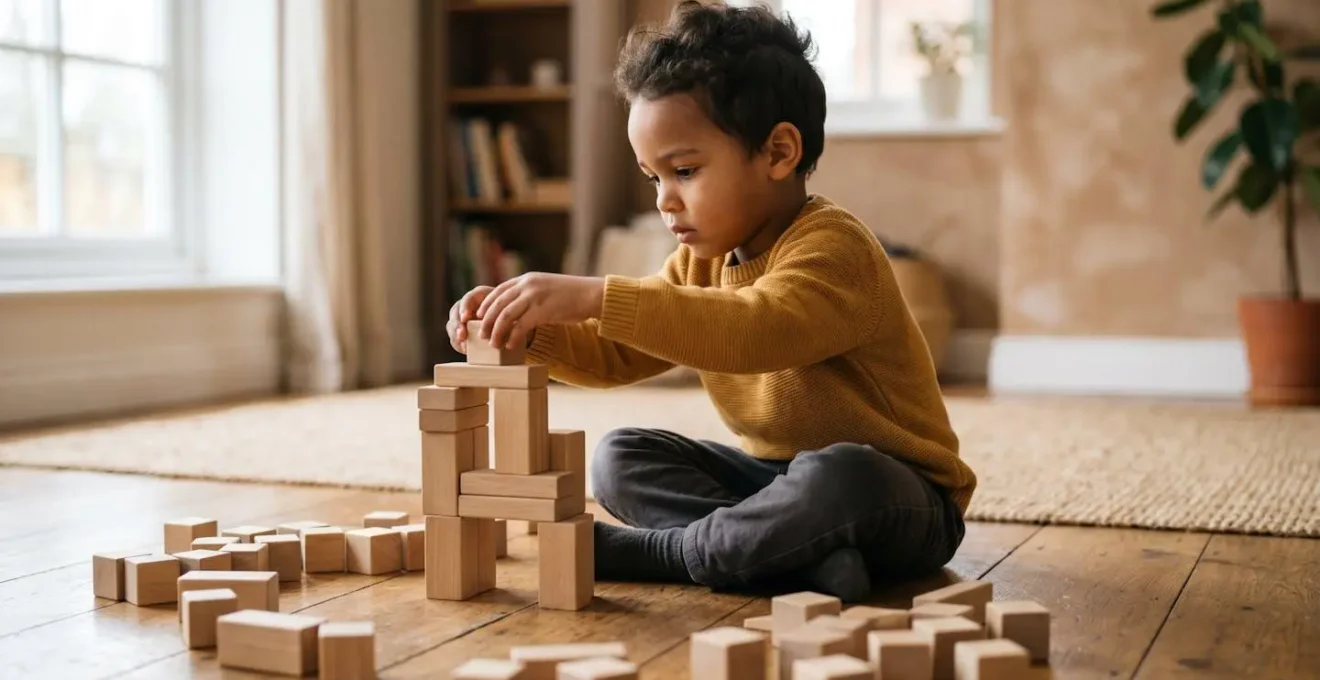
This philosophy is championed by leading developmental psychologists who understand that the process is more important than the product. As Dr. Kathy Hirsh-Pasek of Temple University puts it, true STEM learning is about cultivating a specific mindset.
When children design, build, and revise, they’re not just learning STEM concepts, they’re practicing how to think.
– Dr. Kathy Hirsh-Pasek, Developmental psychologist from Temple University
When a child is in charge, they are not just following a script; they are writing it. They are practicing planning, sequencing, and adapting when their initial idea doesn’t work. A toy that does too much robs the child of these critical opportunities to practice thinking for themselves. The best STEM toy is often the one that does the least, forcing the child to do the most.
Why Sensory Input Before Age 3 Determines Brain Architecture?
The first three years of life are a period of explosive brain development. During this time, the brain forms more than a million new neural connections every second. This intricate network, the very cognitive architecture that will support all future learning, is built not from abstract knowledge, but from concrete sensory experiences. The feel of rough bark, the smell of baking bread, the sight of water splashing—these inputs are the literal building blocks of the brain.
This is why hands-on, multi-sensory play is not just « fun » for toddlers; it’s a biological necessity. Construction toys, in particular, are powerhouses for building this architecture. They require children to use their eyes and hands in concert, developing the spatial reasoning skills that are foundational to mathematics and engineering. The impact is measurable and significant; a comprehensive meta-analysis of 29 studies found that children who regularly play with construction toys show marked improvement in their mathematical abilities.
But the link to coding is even more direct and surprising. Many fundamental programming concepts can be introduced through simple sensory play, long before a child can read or write. What looks like simple sorting is actually an introduction to data classification, a core computer science skill.
- Data Classification: Sorting objects by texture (rough vs. smooth), temperature (warm vs. cold), or weight (heavy vs. light) teaches the brain how to categorize information based on attributes.
- Algorithmic Sequencing: Following a simple recipe involves a step-by-step process. « First, we smell the vanilla, then we feel the dough, then we see it turn brown in the oven. » This is a sensory algorithm.
- If-Then Logic: Bath time is a fantastic coding lab. « If I push the boat, then it moves. » « If I pour water in the cup, then it fills up. » This is pure cause-and-effect logic.
By providing a rich sensory environment, you are not just entertaining your child. You are providing the raw data their brain needs to build the complex pathways required for future abstract thinking in fields like coding and science.
Key Takeaways
- Coding is a mindset, not a gadget. The most important skills—logic, problem-solving, and persistence—are learned through hands-on, screen-free play.
- Classic toys are powerful coding tools. Marble runs teach debugging, blocks foster creativity, and puzzles build resilience. The key is to see them through a new lens.
- Your role is to be a « play narrator. » By framing your child’s natural exploration with the language of science and logic, you make learning visible and intentional.
Logic Puzzles for Preschoolers: How to Teach Persistence When a Puzzle Is « Too Hard »?
Every parent has seen it: the moment of frustration when a puzzle piece just won’t fit. The child pushes, tries to force it, and then declares, « It’s too hard! » before giving up. This moment is one of the most valuable teaching opportunities you will ever have. How you respond can mean the difference between fostering a fixed mindset (« I’m not good at this ») and a growth mindset (« I haven’t figured this out *yet* »). Logic puzzles are less about finding the right answer and more about building the emotional resilience to keep searching when the answer isn’t obvious.
This « productive struggle » is where the brain builds new connections. When a task is challenging but achievable, the mind is stretched and grows stronger. Your goal is not to solve the puzzle for your child, but to become their coach in persistence. This means reframing the challenge and praising the process, not the result. Instead of « You’re so smart! » when they succeed, try « I saw how you kept trying different pieces. Your brain is working so hard! »
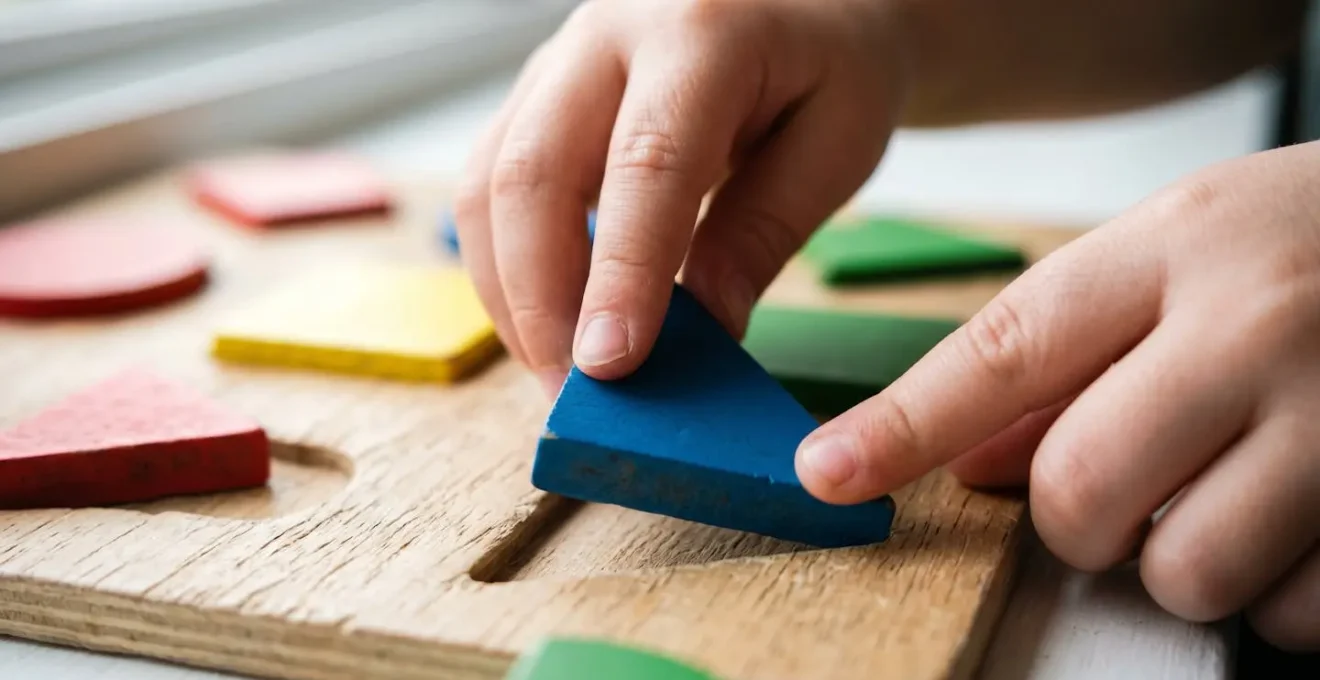
The language you use is a powerful tool. By shifting your phrasing, you can transform a moment of frustration into a lesson on the value of effort. Here are some simple swaps to encourage a growth mindset during puzzle time:
- Instead of « You’re so smart! » say: « I noticed you tried turning the piece in a different direction. That was a great strategy! »
- Instead of « Good job! » say: « This puzzle is really making your brain work hard and grow stronger! »
- Instead of « That’s wrong, » say: « That piece doesn’t fit there yet. What else could you try? »
- Instead of « Let me do it, » say: « You’ve been working on this for five minutes. Your brain is building new connections! »
By embracing these challenging moments, you teach your child that difficulty is not a signal to stop, but a sign that they are learning. This persistence is arguably the single most important skill for any future programmer, scientist, or innovator.
Now that you can see the coding potential in everyday play, the next step is to consciously apply this new perspective. Begin today by observing your child’s activities and start narrating the incredible logic, problem-solving, and creativity you witness in their screen-free world.