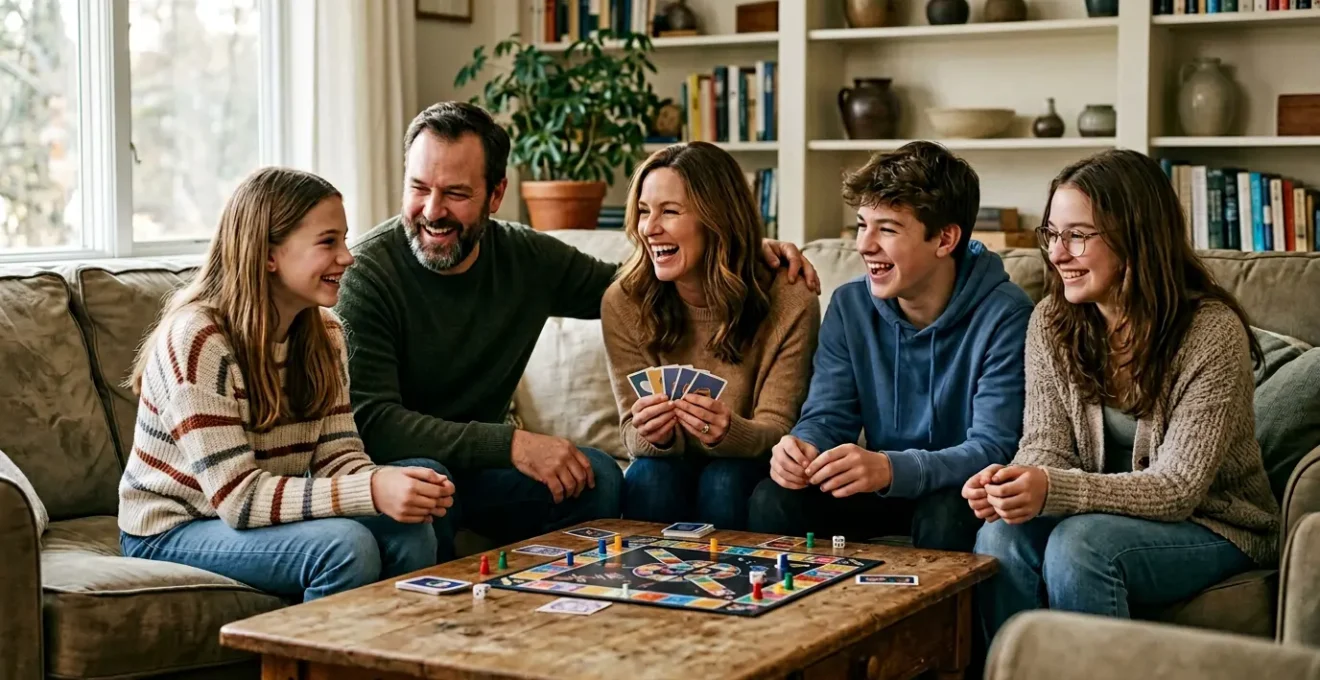
As children grow into teens, many parents feel a growing distance, and the usual attempts at « quality time » often fall flat. The solution isn’t to find a magical new activity, but to fundamentally redesign your approach. This guide shows you how to build a « Family Operating System »—a culture of shared rituals and responsibilities that teens willingly participate in because it respects their need for autonomy and contribution, fostering deep and lasting bonds.
There’s a quiet tension that settles into many homes with teenagers. The dinner table conversations that once buzzed with stories now hum with the faint glow of screens. You, the parent, feel them drifting, and every attempt to reconnect—suggesting a game night, planning a trip—is met with a sigh, an eye-roll, or a grudging « I guess. » You fear you’re losing them to a world of friends, social media, and a burgeoning independence that seems to have no room for the family unit.
Common advice tells you to « be consistent » or « let them choose, » but these platitudes rarely work because they miss the point. Forcing a teen into « fun » is a recipe for resentment. The problem isn’t the activity itself; it’s the underlying framework. What if the secret to building traditions that stick wasn’t about finding the perfect vacation or board game, but about creating a new family culture? A « Family Operating System » where connection is a built-in feature, not a forced add-on.
This system is built on principles of contribution over compliance, and it values small, consistent moments of connection—micro-rituals—over grand, infrequent gestures. It’s about creating a predictable rhythm that provides security while offering autonomy. This guide will walk you through the essential components of designing this system, from effective communication and shared responsibilities to understanding the very foundations of family bonding that begin in infancy. It’s time to stop forcing fun and start architecting connection.
To help you navigate this journey, we have structured this guide to address the key pillars of building a resilient and connected family culture, from the teenage years back to the very beginning. Here is a look at what we will cover.
Table of Contents: A Roadmap to a More Connected Family Culture
- Why Family Rituals Are the Antidote to Peer Pressure?
- How to Hold a Family Meeting That Doesn’t Feel Like a Corporate Briefing?
- Adventure or Relaxing: Which Trip Style Bonds Families Better?
- The Comparison Error That Drives Wedges Between Siblings
- When to Schedule « Forced Fun »: Why Weekly Is Better Than Monthly?
- Why « Sip and See » Parties Are Better Than Hospital Visits for Recovery?
- Why It Is Normal to Hate Your Husband During the Newborn Phase?
- Household Routine Planning: How to Create a Visual Chore Chart That Actually Works?
Why Family Rituals Are the Antidote to Peer Pressure?
In the often-turbulent world of adolescence, family rituals are far more than just « nice things to do. » They are a foundational component of your Family Operating System, serving as a powerful anchor against the rising tide of peer pressure. When teens have a strong sense of belonging at home, the need for validation from outside groups diminishes. This isn’t just a feeling; it’s backed by research. In fact, a study of 857 high school students confirmed that meaningful family rituals are positively correlated with both perceived parental support and higher-quality friendships.
The mechanism behind this is profound. Rituals provide a safe, predictable space where teens practice social interaction. As one research team noted, the way individuals engage with family during these ceremonies acts as a template for how they will interact within their peer groups. They learn to negotiate, listen, and feel secure in their own identity. This internal security is the ultimate defense against negative external influences. Meaningful rituals create a « protective buffer, » with studies on Portuguese adolescents showing that teens who found meaning in family traditions experienced lower levels of anxiety and depression.
These rituals don’t have to be elaborate. A weekly pizza night where everyone shares their « high » and « low » of the week, or a specific way you celebrate small successes, builds a unique family culture. This shared identity becomes a source of strength, reminding your teen that they are part of something stable and loving, a truth that no amount of peer pressure can erase. It’s not about isolating them; it’s about equipping them with a resilient sense of self so they can navigate their social world with confidence.
How to Hold a Family Meeting That Doesn’t Feel Like a Corporate Briefing?
If family rituals are part of your « Family Operating System, » then the family meeting is where you install the updates. Too often, parents call a « meeting » only when there’s a problem, turning it into a tense lecture that feels like a corporate disciplinary hearing. To be effective, especially with teens, a family meeting must be reframed as a collaborative session for steering the family ship, not a venue for issuing top-down directives. The goal is creating a space for autonomy within structure, where everyone feels heard.
The ideal family meeting is less of a formal sit-down and more of a relaxed, consistent check-in. It should feel like a natural conversation, a moment to connect and solve problems together, not a performance review. The key is to shift the dynamic from parental control to shared governance.

As the image above suggests, sometimes the best meetings don’t happen around a table at all. The environment should encourage openness, not formality. But whether you’re walking in a park or gathered in the living room, a light structure is essential to prevent it from devolving into chaos or, worse, silence. The focus should always be on listening more than talking and empowering teens to take an active role in shaping their family life.
Your Action Plan for Better Family Meetings
- Keep it short: Aim for 15-30 minutes maximum. End on time, even if the agenda isn’t finished; this respects everyone’s schedule and prevents burnout.
- Start with positives: Begin each meeting by having every family member share a compliment or appreciation for another. This sets a positive, collaborative tone.
- Listen more, talk less: As a parent, your role is to facilitate, not dominate. Actively listen to your teen’s perspective before offering your own.
- Rotate leadership: Let a different family member lead the meeting each week. This gives teens ownership and valuable leadership skills.
- Schedule it consistently: A regular weekly meeting at a time that works for everyone makes it a predictable part of the rhythm, not a dreaded surprise.
- Co-create the rules: Involve your teens in establishing the guidelines for the meeting itself. When they help build the structure, they are more likely to respect it.
Adventure or Relaxing: Which Trip Style Bonds Families Better?
The annual family vacation is often seen as the ultimate bonding experience, but it can just as easily become a source of tension. The debate between an action-packed adventure and a laid-back beach holiday is common, with parents wondering which will best bridge the gap with their teens. The answer, however, lies not in the « what » but in the « how. » Neither style is inherently superior; their success depends entirely on the intention behind the trip and how it fits into your family’s needs.
We can think of trips in two distinct categories. The first is the Mission-Based Adventure. This could be anything from learning to ski, tackling a challenging hiking trail, or exploring a new city with a shared goal. These trips are powerful because they force the family to operate as a team. You overcome obstacles together, rely on each other’s strengths, and create « I can’t believe we did that » memories. For a family feeling disconnected, a shared mission can be an incredibly effective way to rebuild a sense of unity and collaborative spirit.
The second category is the Decompression and Connection trip. This is your classic relaxing holiday, designed to lower stress and create space for unstructured time. It works best for families who already have a solid baseline of communication. The open schedule allows for spontaneous conversations and shared moments without the pressure of an itinerary. However, for a family already struggling with disconnection, this lack of structure can backfire, leading to everyone retreating to their own corners—and their own screens. The best strategy is to be honest about your family’s current state. If you need to rebuild a team, choose an adventure. If you need to recharge and enjoy an existing connection, choose relaxation.
The Comparison Error That Drives Wedges Between Siblings
Within the Family Operating System, sibling harmony is a key indicator of health. One of the most corrosive « bugs » that can infect this system is comparison. Whether overt (« Why can’t you be more organized like your brother? ») or subtle (praising one child’s achievements in front of the other), comparison is a poison that fosters resentment and competition. It forces children into boxes, creating roles like « the smart one, » « the athletic one, » or « the difficult one, » which can be incredibly damaging to a teen’s developing sense of self.
The impulse to compare is often well-intentioned—a parent might hope to motivate one child by highlighting another’s success. But the result is almost always the opposite. The child being praised may feel pressure to maintain their status, while the other child feels inadequate, resentful, or simply gives up. As the Positive Discipline Association states, it’s a fundamental error to avoid:
One of the most important things a parent can do to decrease the amount of sibling conflict in your house is to minimize competition. Avoid comparing siblings.
– Positive Discipline Association, Sibling Conflict – Teaching Parenting the Positive Discipline Way
To debug this issue, the focus must shift from comparison to celebration of individual uniqueness. Instead of praise, which judges an outcome, use encouragement, which focuses on effort and progress (« I saw how hard you worked on that project »). Create collaborative experiences where siblings must team up, such as in a family game night where they play against the parents. Most importantly, actively help each child identify and develop their own distinct strengths. When each teen feels valued for who they are, not for who they are in relation to their sibling, the drive for competition fades and is replaced by mutual respect.
When to Schedule « Forced Fun »: Why Weekly Is Better Than Monthly?
The term « forced fun » has a bad reputation for a reason—it often describes high-pressure, infrequent events that everyone dreads. The key to transforming it into authentic connection lies in establishing a healthy Ritual Rhythm. The power of a ritual is not in its grandeur, but in its frequency and predictability. A big, elaborate family day once a month often carries too much weight and expectation, making any small hiccup feel like a catastrophic failure. A small, weekly touchpoint is far more effective and sustainable.
This principle is backed by data. When it comes to family meetings, for instance, parenting research shows that sessions of 15 to 30 minutes weekly are the most effective format. This same logic applies to bonding rituals. Short, consistent, low-effort moments of connection are easier to maintain and have a cumulative effect on family cohesion. This is the power of the micro-ritual. It could be as simple as making pancakes together every Saturday morning, taking a 10-minute walk after dinner, or sharing « one good thing » from the day before bed.
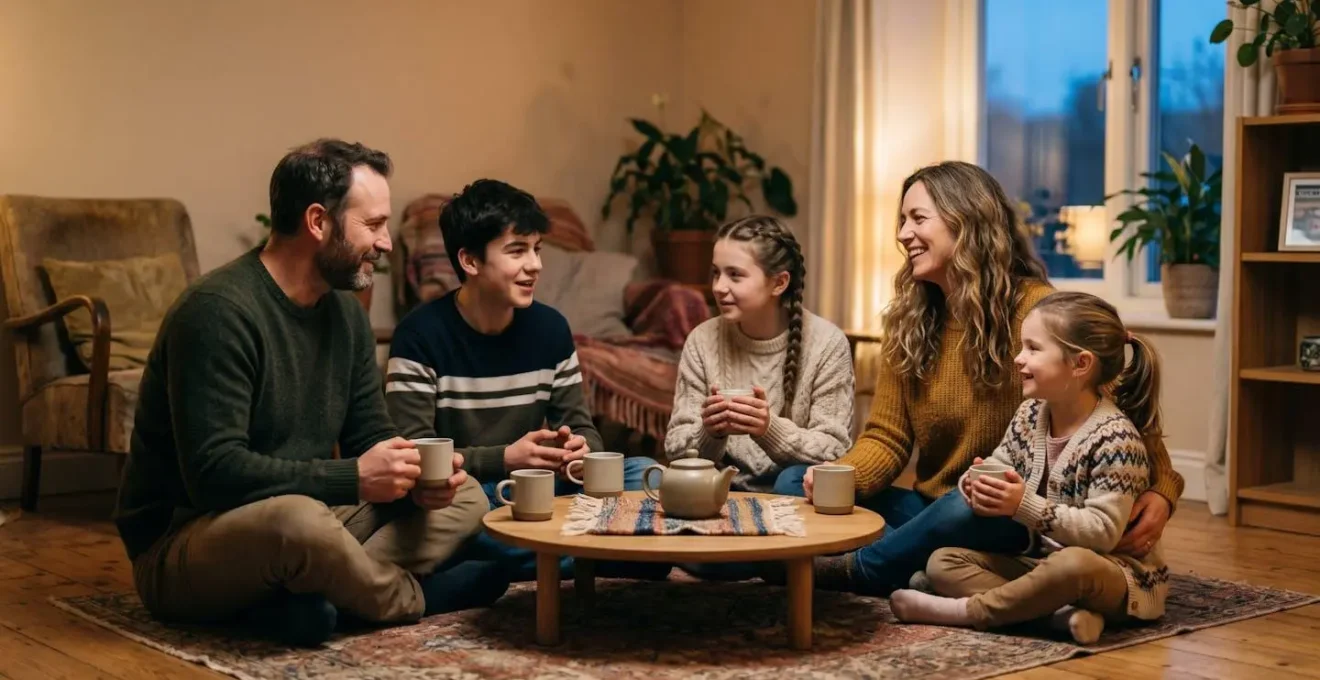
These micro-rituals are powerful because they don’t feel « forced. » They are woven into the fabric of daily life, creating a steady rhythm of connection that teens can rely on. They provide the same sense of belonging and stability as a big event, but without the pressure. Instead of scheduling « forced fun, » think of it as protecting small pockets of time for connection. It’s the gentle, steady beat of the family drum that keeps everyone in sync, not the occasional clash of cymbals.
Why « Sip and See » Parties Are Better Than Hospital Visits for Recovery?
To truly understand how to build resilient family systems with teens, it’s helpful to rewind to their very beginning. The way a family protects its newest, most vulnerable configuration sets the tone for years to come, and the principles of managing energy and social interaction are universal. This is perfectly illustrated by the modern trend of the « Sip and See » party, a practice that prioritizes the new family unit over the chaotic tradition of endless hospital visits.
A Sip and See is a short, planned-at-home gathering, typically a few weeks after birth, where friends and family can meet the new baby in a controlled environment. Unlike the unpredictable stream of visitors at a hospital or in the first days at home, a Sip and See gives the new parents complete control. They set the time (e.g., a two-hour window), manage the guest list, and can politely end the event when their energy wanes. This approach creates a protective bubble around the recovering mother and newborn.
In contrast, hospital visits and an open-door policy at home can be physically and emotionally draining. New parents, especially mothers, are expected to « host » while recovering from childbirth and navigating the immense challenge of caring for a newborn. A Sip and See flips this dynamic. It treats the well-being of the new family as the top priority, a core principle of a healthy Family Operating System. It teaches the surrounding community to respect the family’s boundaries and needs—a foundational lesson that remains relevant as children grow into fiercely independent teenagers who still need the security of a well-managed home base.
Why It Is Normal to Hate Your Husband During the Newborn Phase?
That protective bubble is crucial because while the family is managing external pressures, the internal dynamics are often under immense strain. The provocative phrase « hating your husband » during the newborn phase points to a deeply felt but rarely discussed reality. It’s not true hate, of course, but an intense frustration born from sleep deprivation, hormonal shifts, and a seismic redistribution of labor and identity. Acknowledging this feeling as normal is the first step to navigating it.
This period is the first major stress test of the couple’s « operating system. » All the unstated assumptions about roles, responsibilities, and emotional support are brought to the surface and often found wanting. The mother, who typically bears the brunt of the physical recovery and feeding demands, can feel isolated and resentful when her partner’s life seems to continue with less disruption. This disparity in experience, coupled with the inability to communicate effectively due to sheer exhaustion, is a perfect recipe for conflict.
The solution is not to pretend these feelings don’t exist, but to treat them as a « system alert. » It’s a sign that the old way of operating is no longer functional. This is where proactive communication, even when it feels impossible, is key. It means having frank conversations about the division of labor (not just baby care, but all household tasks), scheduling time for the mother to have uninterrupted rest, and a partner who actively seeks to understand and validate her experience rather than trying to « fix » it. Overcoming this first major family crisis together by rewriting your « couple code » builds a foundation of resilience and partnership that will be essential for every stage to come.
Key Takeaways
- The key to connecting with teens is not the activity itself, but designing a « Family Operating System » based on contribution and shared ownership.
- Focus on « micro-rituals »—small, consistent, low-effort moments of connection—which are more sustainable and effective than infrequent, high-pressure events.
- Empower teens by co-creating rules and routines, from family meetings to chore systems, to foster a sense of autonomy and respectful collaboration.
Household Routine Planning: How to Create a Visual Chore Chart That Actually Works?
Having navigated the foundational challenges of family life, we return to the daily reality with older children. The principles of shared contribution and clear communication are never more critical than when managing the household itself. For many families, the chore chart is a battleground. But it doesn’t have to be. A truly effective chore system is not just a to-do list; it’s a visual representation of your family’s culture of contribution over compliance. As research from the Strengthening Families Program has shown, families that function well are marked by cohesion, communication, and involvement—all of which can be reinforced by a well-designed routine.
The reason most chore charts fail with teens is that they feel like a top-down mandate. The secret is to transform « chores » into « contributions » and to give teens ownership over the system. This means moving away from static lists and embracing more dynamic, collaborative models. Gamifying the process by using points, co-designing rewards, and framing tasks as part of a « team mission » can completely change a teen’s attitude. The language matters: « family operations » sounds much more appealing than « household chores. »
| Approach | Traditional Chore Chart | Gamified ‘Family Operations’ System |
|---|---|---|
| Visual Format | Static list with checkboxes | Kanban board (To Do, Doing, Done) |
| Language Used | ‘Chores’ or ‘Tasks’ | ‘Team Contributions’ or ‘Family Operations’ |
| Reward System | Stars or stickers | Points redeemable for privileges (later curfew, streaming choice, hosting friends) |
| Teen Involvement | Assigned by parents | Co-designed reward system with teen input |
| Identity Appeal | Obligation-focused | Contribution to team success |
| Progression Path | Static expectations | Linked to ‘Rites of Passage’ (mastery unlocks new privileges) |
This table illustrates a fundamental shift in mindset. Instead of enforcing compliance, you are inviting contribution. By linking responsibilities to earned privileges and allowing teens to help design their own reward structure, you are speaking their language: a language of autonomy, achievement, and fairness. This transforms a daily battle into a collaborative system that builds responsibility and strengthens the entire family unit.
Start today by taking one small step. Don’t try to overhaul everything at once. Choose one area—be it a weekly check-in meeting or a new approach to chores—and begin the conversation with your family about building a better system together.