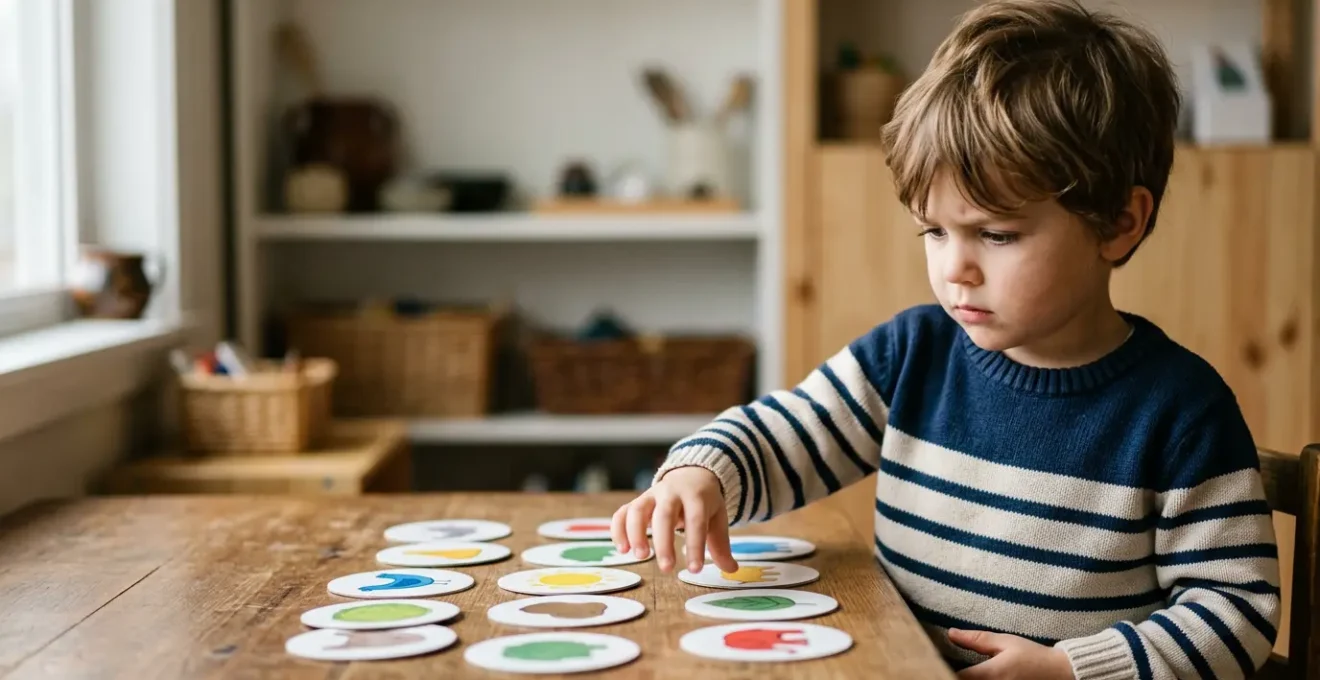
Memory games are a clinical tool disguised as play, directly training the core cognitive skill—working memory—that governs a child’s ability to pay attention.
- The simple act of holding a card’s location and image in mind strengthens the brain’s « mental notepad, » which is essential for following instructions and staying on task.
- Personalizing the game with family photos and varying the themes are critical for maintaining engagement and preventing the boredom that kills motivation.
Recommendation: Integrate a 10-minute memory game session before homework to act as a cognitive warm-up, priming your child’s brain for learning and focus.
It’s a scene familiar to many parents: you ask your child to do something, and moments later, their attention has drifted elsewhere, the instruction seemingly vanished into thin air. This struggle with focus can be a source of significant worry. We’re often told to reduce distractions or find « fun » learning activities, but this advice is vague and rarely addresses the root cause of a wandering mind. The conventional wisdom about memory games is that they are simply for, well, memory. They’re seen as a basic pastime for rainy days.
But what if the true power of a simple matching game had less to do with remembering where the cartoon monkey was and more to do with building the fundamental neural architecture of attention itself? The key isn’t in the act of memorization, but in the targeted exercise of working memory. This cognitive system is the brain’s active workspace, the mental « RAM » that allows us to hold and manipulate information for short periods. It’s the engine behind following multi-step directions, solving math problems, and maintaining focus during a conversation.
This article reframes the memory game not as a toy, but as a practical, 10-minute daily workout for your child’s attention span. We will explore the science of why it works, show you how to create a powerful and engaging version at home, and reveal the common mistakes that undermine its effectiveness. You’ll discover how to transform this simple activity into a cornerstone for developing your child’s concentration.
This guide provides a structured approach to understanding and implementing memory games as a tool for cognitive development. The following sections break down the science, practical application, and related strategies to help you effectively boost your child’s focus.
Summary: Using Memory Games to Build Your Child’s Attention
- Why Short-Term Memory Games Help With Following Instructions?
- How to Make Personal Memory Cards With Family Photos?
- Animals or Numbers: Which Theme Engages Reluctant Players?
- The Repetition Mistake That Kills Interest in the Game
- When to Play Memory Games: Why Before Homework Is Best?
- Why Early Exposure to Words Predicts Academic Success at Age 9?
- Why Solving Riddles Boosts Working Memory and Inhibition?
- Educational Toys: Why « Open-Ended » Toys Foster More Creativity Than Battery-Operated Ones?
Why Short-Term Memory Games Help With Following Instructions?
The ability to follow instructions like « please go to your room, get your blue jacket, and bring me your shoes » doesn’t primarily depend on long-term memory. It relies on working memory, the cognitive system responsible for holding and processing information in real-time. Think of it as a temporary mental notepad. When this notepad has a limited capacity, items get « erased » before the task is complete, which is why a child might return with only the jacket.
Memory matching games are a direct workout for this mental notepad. With every turn, a child must:
- Hold the image and location of a flipped card in their mind (e.g., « the car is in the top left corner »).
- Scan the other cards for a potential match.
- Suppress the impulse to flip cards randomly.
- Update their mental map when a new card is revealed.
This entire process is a concentrated exercise in managing cognitive load and strengthening attentional control. The capacity of this system is not fixed; it develops over time. In fact, research shows that adults perform approximately twice as well as young children on working memory tasks, highlighting a clear developmental trajectory that can be supported through practice.
By consistently playing these games, you aren’t just teaching your child to find pairs. You are systematically expanding the capacity of their working memory, which directly translates into a better ability to hold onto and act on instructions in their daily life.
How to Make Personal Memory Cards With Family Photos?
The most effective tools are often the ones that resonate personally with a child. While store-bought memory games are convenient, creating a set with familiar faces—family members, pets, or favorite toys—can dramatically increase a child’s motivation and emotional investment. This personal connection transforms the game from a generic task into a meaningful activity, which is a powerful driver for engagement, especially for children who are initially hesitant to play.
The process of creating the cards can be a bonding activity in itself. Printing two copies of several family photos onto sturdy cardstock is all it takes. When selecting photos, aim for clear, simple headshots that are easily distinguishable. The goal is to make the visual recall task challenging but not frustrating. For younger children or those just starting, it’s essential to adjust the difficulty. Beginning with just four or five pairs prevents them from becoming overwhelmed and allows them to experience success, which builds confidence.
This hands-on approach also offers a prime opportunity for language development. As you play, you can talk about the people in the photos, share memories, and encourage your child to name them. This adds a rich, conversational layer to the game, reinforcing both memory and vocabulary.
Your Action Plan: Creating a Simplified, Personalized Matching Game
- Select a few pairs: Start by taking a regular memory game and separating out just 6-8 card pairs. You can increase this number as your child’s age and attention span grow.
- Set up the board: Separate the deck so you have one half of each match face UP on the table or floor. This provides a clear visual anchor for your child.
- Create the draw pile: Shuffle the other half of each match (your remaining 6-8 cards) and place them in a stack face DOWN.
- Start matching: Have your child flip over one card from the draw pile and then find its match among the face-up cards on the table.
- Talk about the pictures: As your child finds matches, talk about the images on the cards. Say the words multiple times and ask your child to identify the picture to build vocabulary.
Animals or Numbers: Which Theme Engages Reluctant Players?
The short answer is: the theme that your child is currently obsessed with. The power of a memory game to hold a child’s attention is directly tied to their level of interest in the subject matter. For a child fascinated by dinosaurs, a set of generic fruit cards will feel like a chore. But a deck filled with a T-Rex, Stegosaurus, and Triceratops can transform the game into an exciting paleontological expedition. Interest is the fuel for attention.
This is where parents have a distinct advantage. You know your child’s world. Are they captivated by construction vehicles, enchanted by fairy tales, or passionate about different types of animals? Tapping into these existing interests is the most effective strategy for engaging a reluctant player. The theme provides a narrative hook, giving the child a reason to care about finding the matches beyond the simple mechanics of the game.
This introductory paragraph sets the stage for the visual exploration below. The image demonstrates how varied and engaging memory card themes can be, moving beyond simple numbers or letters to textures, patterns, and abstract shapes.
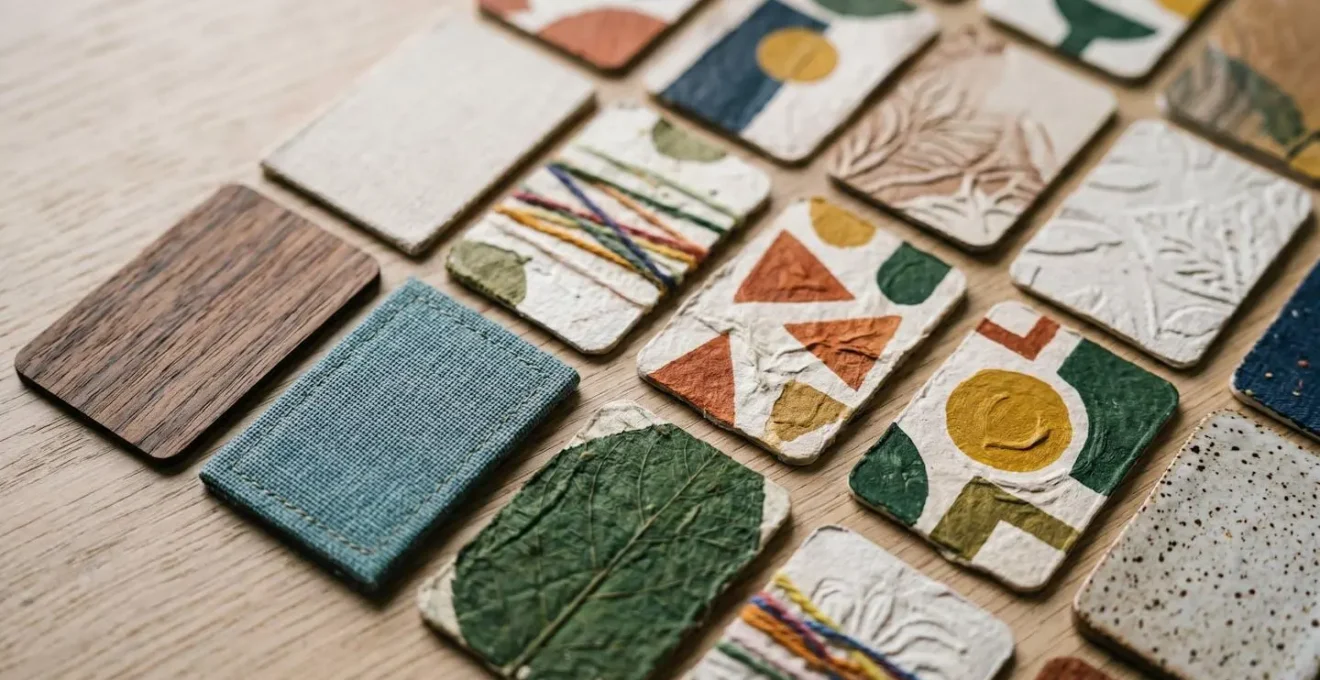
As the illustration shows, themes can be abstract, textural, or based on specific categories. The key is to observe what captures your child’s eye. Don’t be afraid to have several small, themed decks that you can rotate. One week it might be all about sea creatures; the next, it could be about different shapes and colors. By aligning the game’s theme with your child’s current passion, you are removing the biggest barrier to entry: a lack of intrinsic motivation.
The Repetition Mistake That Kills Interest in the Game
The single biggest mistake parents make with educational games is drilling them into oblivion. Playing the exact same 12-pair animal memory game every single day is the fastest way to turn a fun activity into a dreaded task. While repetition is necessary for learning, mind-numbing repetition kills interest. A child’s brain, just like an adult’s, craves novelty and a sense of progress. When the game becomes predictable and monotonous, the cognitive engagement plummets, and with it, the attention-building benefits.
The solution is not to abandon the game but to introduce strategic variety. This can be achieved in several ways:
- Rotate themes: As discussed previously, switch between different themed decks.
- Change the number of pairs: Increase the difficulty by adding more pairs as your child’s skill improves, or decrease it on days when they seem tired.
- Alter the rules: Play « go fish » with the cards, use them to tell a story, or sort them by category instead of matching them.
This approach keeps the core « working memory workout » intact while packaging it in a new and exciting way. A study on play-based learning highlights this very point. As explained by Cadavid-Ruiz and colleagues:
Play makes it possible to reduce anxiety, which increases motivation and provides further chances to try out solutions and practice with no real consequences.
– Cadavid-Ruiz et al., Executive Functions Can Be Improved in Preschoolers Through Systematic Playing in Educational Settings: Evidence From a Longitudinal Study
Variety is a form of play. It reduces the anxiety of performance and keeps motivation high. In fact, a 2019 study demonstrated that using 32 different games designed to promote executive functions led to significant improvements in preschoolers. While you don’t need 32 decks, the principle holds: variety is the key to sustained engagement and long-term cognitive gains.
When to Play Memory Games: Why Before Homework Is Best?
The timing of a mentally demanding activity can be just as important as the activity itself. For a child, whose executive function resources are still developing, cognitive stamina is a finite resource. Asking them to engage in a focus-intensive task like a memory game after a long school day and a grueling homework session can be counterproductive. Their « attention tank » may already be running on empty, leading to frustration for both of you.
A more effective strategy is to use the memory game as a « cognitive warm-up. » Playing for 10 minutes before homework can prime the brain’s executive function circuits. It activates the neural pathways responsible for working memory and focus in a low-stakes, enjoyable context. This can help the child transition into a « focus mode » more smoothly, making the subsequent homework session feel less daunting. The game acts as a bridge between the free-form state of after-school play and the structured demands of academic work.
However, this is not a one-size-fits-all rule. It’s crucial to observe your individual child, as a landmark study on working memory highlights the need for a tailored approach.
Case Study: The Impact of Cognitive Load on Attention
Research examining children with low working memory, including some with ADHD, found they often struggle in classroom activities that require holding instructions or information in mind. Laboratory tasks designed to simulate these high-demand classroom activities confirmed that for these children, cognitive tasks can quickly deplete their limited executive function resources. This suggests that while a memory game can be a warm-up for some, for a child who is already feeling overwhelmed or has significant working memory challenges, it could be an additional drain. The key takeaway is that parents must become keen observers and adjust the timing based on their child’s unique energy and focus levels on any given day.
For most children, playing before homework is a powerful strategy. But if you notice your child is more frustrated or depleted after playing, try a different time, such as in the morning or after a long break. The goal is to find the sweet spot where the game energizes their focus rather than exhausts it.
Why Early Exposure to Words Predicts Academic Success at Age 9?
While a memory game is a powerful tool for visual recall and working memory, its benefits can be amplified significantly when it’s used as a vehicle for language. The simple act of talking about the cards—naming the objects, describing the colors, asking questions—transforms the activity into a rich, language-building experience. This « language bath » is not just a nice add-on; it’s a critical predictor of long-term academic success.
The link between early language exposure and later cognitive abilities is well-documented. In a landmark piece of longitudinal research, a 10-year study found that the amount of adult talk children experienced in their first three years was directly associated with their verbal abilities and IQ at ages 9-14. Every word you say during the game contributes to this crucial foundation. Saying « Look, you found the big, red car! » instead of just « You got a match » introduces adjectives, colors, and more complex sentence structures.
This image of a parent and child engaged in play perfectly captures the essence of a language-rich interaction. It’s in these simple, connected moments that a child’s vocabulary and understanding of the world expand.
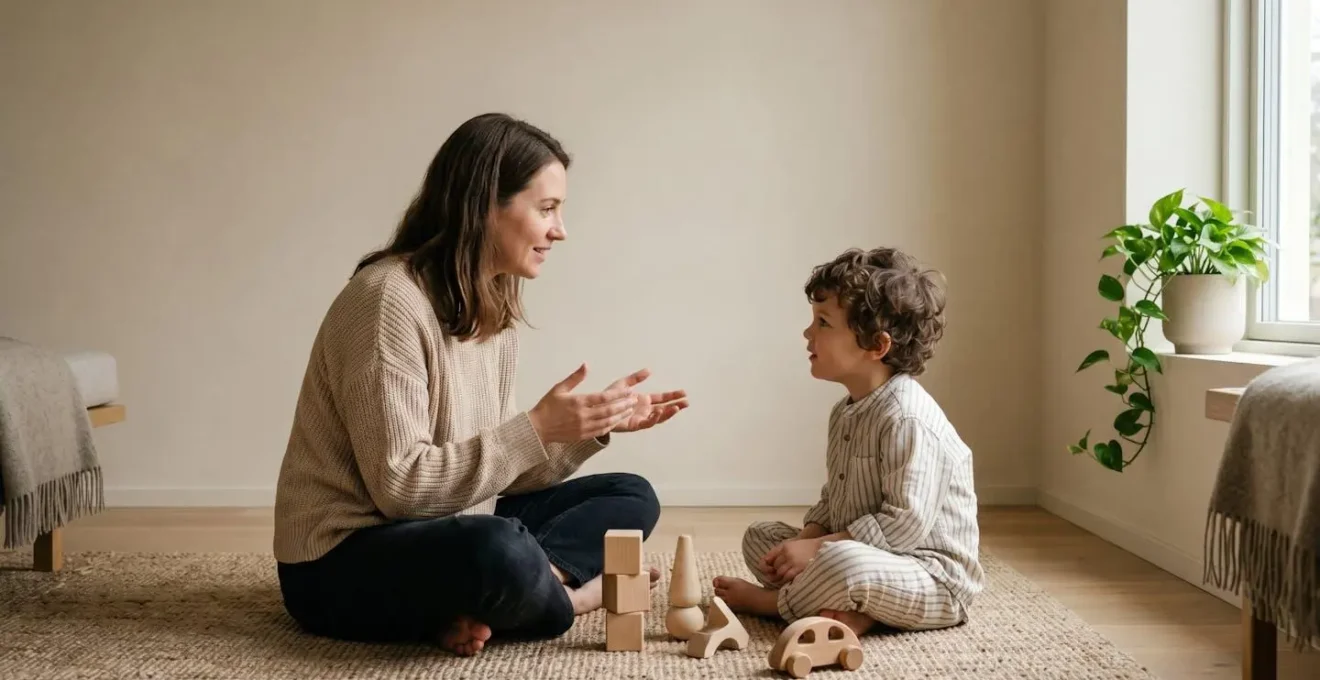
Think of each memory game session as an opportunity to deposit words into your child’s « vocabulary bank. » Ask open-ended questions like, « What sound does a cow make? » or « Where have we seen a boat before? » This not only reinforces the words but also builds connections to their own experiences, making the learning deeper and more permanent. By consciously infusing language into the game, you are leveraging a 10-minute activity to build skills that will benefit them for years to come.
Why Solving Riddles Boosts Working Memory and Inhibition?
While memory matching games are a fantastic tool, it’s helpful for parents to understand the underlying principles so they can identify other « brain-building » activities. Solving riddles, for instance, exercises the very same executive function muscles, but in a slightly different way. This demonstrates how a variety of activities can be used to strengthen a child’s cognitive foundation.
Consider a simple riddle: « I have cities, but no houses. I have mountains, but no trees. I have water, but no fish. What am I? » To solve this, a child must engage two key executive functions:
- Working Memory: They must hold all the clues (« cities, no houses, » « mountains, no trees ») in their mind simultaneously. They cannot forget the first clue while processing the third.
- Inhibition: They must suppress the most obvious, but incorrect, answers. When they hear « cities, » their brain might immediately jump to « a country. » But the next clue, « no houses, » requires them to inhibit that initial response and re-evaluate. The answer, « a map, » requires a mental leap.
This process of holding, manipulating, and inhibiting information is a sophisticated cognitive workout. Research on play-based cognitive programs confirms that children who engaged with a variety of executive function-building games showed broad improvements. These studies found that consistent play over several weeks can lead to measurable gains not just in cognitive skills but also in language and even motor domains.
Understanding this allows you to see the educational value in everyday interactions. Telling jokes, playing « I Spy, » or solving riddles during a car ride are not just ways to pass the time; they are micro-doses of executive function training. By diversifying the types of games you play, you target these crucial brain skills from multiple angles, making the learning more robust and generalized.
Key Takeaways
- The primary goal of memory games is to train working memory, the cognitive engine that powers sustained attention and the ability to follow instructions.
- Personalization and variety are essential. Use themes your child loves and create homemade cards to maximize engagement and prevent the boredom that undermines the game’s benefits.
- The context of play is crucial. Use the game as a vehicle for language-rich interaction and connection, turning a simple matching task into a powerful learning experience.
Educational Toys: Why « Open-Ended » Toys Foster More Creativity Than Battery-Operated Ones?
In a world filled with flashy, battery-operated toys that promise to teach your child the alphabet, there’s a growing understanding that simpler is often better. The concept of « open-ended » toys—toys that can be used in many different ways—is directly linked to fostering creativity, problem-solving, and, importantly, executive function. A set of plain wooden blocks, for example, can become a castle, a spaceship, or a bridge. The child, not the toy, dictates the play.
Battery-operated, single-purpose toys often do the opposite. A talking dog that sings the ABCs when you press its paw teaches a simple cause-and-effect relationship, but the play pattern is closed. The child’s role is passive; they are a button-pusher, not an active creator. This limits imaginative exploration and the development of internal narrative skills. Studies suggest that open-ended toys promote creativity and problem-solving skills up to three times better than toys with predetermined outcomes because they require the child to do the cognitive heavy lifting.
How does this relate to our memory game? A simple deck of matching cards is a perfect example of an open-ended tool. Its primary purpose is a matching game, but it can be so much more.
- The cards can be used for sorting (by color, type, or other attributes).
- They can become characters in a story the child creates.
- They can be used as prompts for drawing or discussion.
This versatility empowers the child, placing them in the driver’s seat of their own learning and play. It encourages flexible thinking and cognitive control—core components of executive function. By choosing simple, open-ended tools like memory cards and blocks over prescriptive electronic toys, you provide a richer environment for your child’s developing mind.
Your next step is to choose one simple strategy from this guide and try it for 10 minutes today. Observe, adapt, and begin the process of building a stronger foundation for your child’s attention. This consistent, playful practice is the key to fostering lasting cognitive skills.