
If you’re experiencing pain while breastfeeding, it’s not a sign of failure or something you must endure. Persistent pain is a critical diagnostic signal that often points to an underlying mechanical issue with your baby’s latch, even if it looks correct. This guide will help you decode these signals, understand the root causes of breastfeeding challenges, and determine when seeking professional help from an International Board Certified Lactation Consultant (IBCLC) is the essential next step for both your well-being and your baby’s.
You’ve been told that breastfeeding is the most natural thing in the world, yet for you, it’s accompanied by excruciating pain. Every feed is a cycle of dread and determination. Well-meaning friends and family say, « It gets better, » or « Just push through it, » leaving you feeling isolated and wondering if you’re the only one struggling. You look at your baby, and the latch seems fine—mouth wide, lips flanged out—so why does it still hurt? This disconnect between what you see and what you feel is one of the most confusing and disheartening experiences for a new mother.
The common advice to « just fix the latch » often oversimplifies a complex biomechanical process. The truth is, many breastfeeding issues are not visible to the untrained eye. They are rooted in subtle, underlying physiological mechanics of the baby’s mouth and the hormonal feedback loop of the mother’s body. Pushing through significant pain is not a test of your endurance; it is a missed opportunity to gather crucial data about your and your baby’s health. Pain is a signal that something needs investigation, not tolerance.
This article moves beyond the platitudes. As an International Board Certified Lactation Consultant (IBCLC), my goal is to empower you with the technical knowledge to understand these signals. We will explore why a « perfect » latch can still be painful, how to address supply concerns with clinical precision, and the critical role your support system plays. By understanding the ‘why’ behind the ‘what,’ you can move from a place of uncertainty to one of confident action, knowing precisely when it’s time to call for professional help.
To help you navigate these complexities, this guide is structured to address the most pressing questions and challenges you may be facing. Explore the topics below to find the evidence-based answers and practical strategies you need.
Summary: A Clinical Guide to Solving Painful Breastfeeding and Latch Issues
- Why a « Perfect Latch » Can Still Hurt if Your Baby Has a Tongue Tie?
- How to Power Pump to Boost Milk Supply in 48 Hours?
- Nipple Shield Dependence: How to Transition Back to Breast Successfully?
- The Pediatrician Error That Leads to Unnecessary Formula Supplementation
- How to Prepare for a Virtual Lactation Consult to Get Maximum Results?
- How to Heal Cracked Nipples Without Stopping Breastfeeding?
- Why Oxytocin Release During Skin-to-Skin Boosts Milk Production?
- Building a Breastfeeding Support System: How Partners Can Help Increase Success Rates by 40%?
Why a « Perfect Latch » Can Still Hurt if Your Baby Has a Tongue Tie?
One of the most frustrating scenarios for a breastfeeding mother is being told her baby’s latch looks perfect while she continues to experience toe-curling pain. This isn’t in your head; it’s often a sign of an underlying functional problem, most notably ankyloglossia, or a tongue-tie. A tongue-tie is a condition where the lingual frenulum, the strip of tissue connecting the baby’s tongue to the floor of their mouth, is shorter than usual, restricting the tongue’s range of motion. This restriction is the key issue.
Effective milk transfer requires the baby’s tongue to extend, cup the breast, and create a vacuum through a wave-like, peristaltic motion. When the tongue is tethered, the baby cannot perform these physiological mechanics correctly. To compensate, they often use their jaws and facial muscles to clamp down on the nipple to draw out milk. This is known as compensatory feeding. From the outside, the baby’s mouth may be wide and their lips flanged, but on the inside, your nipple is being compressed against their hard palate instead of being drawn deep into the mouth to the soft palate. This compression is what causes severe pain and nipple trauma.
Case Study: The Hidden Impact of Compensatory Feeding
A 2024 systematic review published in the Maternal and Child Health Journal investigated the experiences of mothers breastfeeding infants with tongue-ties. The findings were stark: these mothers face a significantly higher risk of painful latching, nipple trauma, and stopping breastfeeding early. Critically, the review highlighted that even when a latch appeared visually correct, mothers reported excruciating pain. This was attributed directly to compensatory feeding patterns where babies use facial muscles instead of proper tongue movement. This confirms that a mother’s report of pain is a more reliable diagnostic tool than a visual latch assessment alone.
If you are experiencing pinching, creased, or blanched nipples after a feed, despite a « good-looking » latch, it is a major red flag. This isn’t a problem you can fix by simply adjusting the position; it requires a functional assessment of your baby’s oral anatomy by a trained professional, like an IBCLC, who can identify restricted tongue movement and guide you on appropriate next steps.
How to Power Pump to Boost Milk Supply in 48 Hours?
Concerns about milk supply often follow painful or inefficient breastfeeding. When a baby isn’t transferring milk effectively, your body receives the signal to produce less, creating a stressful feedback loop. Power pumping is a clinical technique designed to mimic a baby’s cluster feeding during a growth spurt. This intense stimulation sends a powerful message to your brain to increase prolactin levels, the key hormone responsible for milk production. It is not about emptying the breast; it is about frequency and stimulation.
This method involves a specific one-hour cycle of pumping and resting. The goal is to create multiple « let-downs » (milk ejections) in a short period, signaling high demand. Before starting, ensure your equipment is optimal. The single most important factor for effective pumping is correct flange fit. A flange that is too small can cause pinching and blocked ducts, while one that is too large can pull in too much areola tissue, reducing efficiency and causing pain. Your nipple should move freely within the flange tunnel without rubbing, and minimal areola should be drawn in.
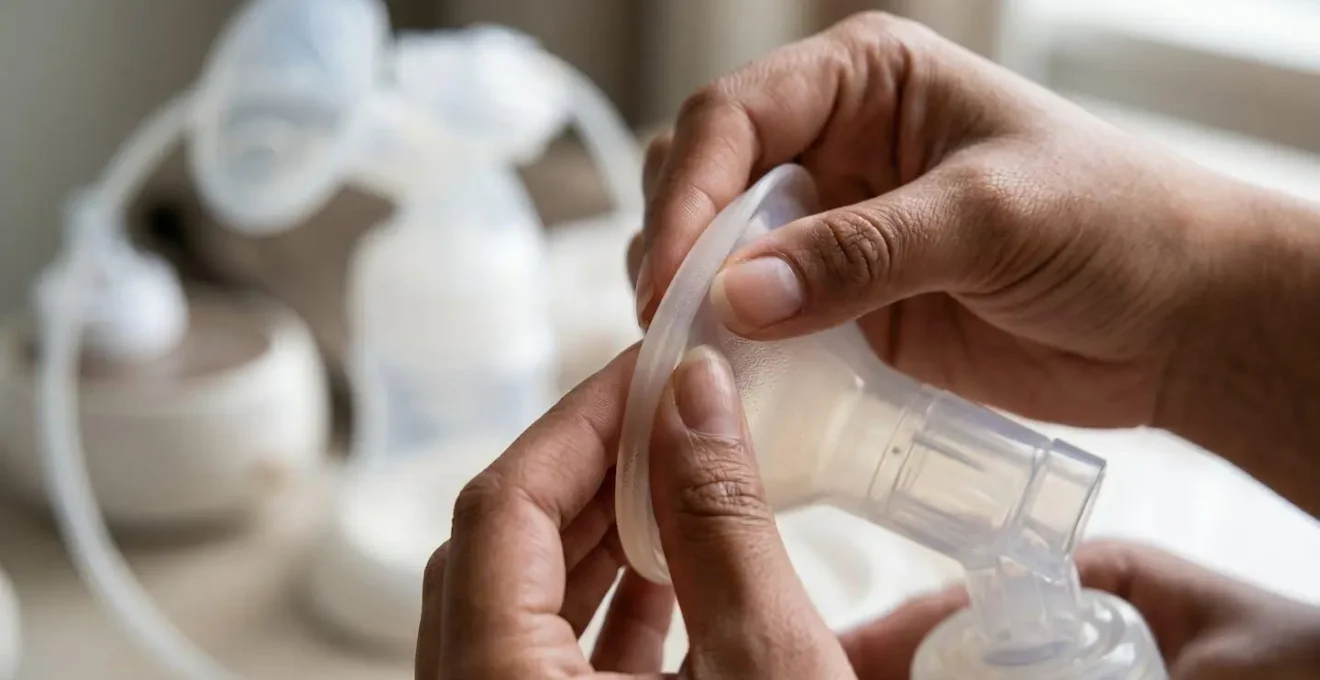
As the image above illustrates, careful positioning and correct sizing are foundational to successful pumping. Once you have confirmed your flange size, you can begin the power pumping protocol. Consistency is key; performing this cycle once or twice a day for 2-3 consecutive days can often yield a noticeable increase in supply. It is an intensive strategy best used for short-term boosting, not as a regular pumping routine.
Standard Power Pumping Protocol
- Pump for 20 minutes: Start with a continuous 20-minute session.
- Rest for 10 minutes: Put the pump down completely. Do not pump.
- Pump for 10 minutes: Resume pumping for a shorter 10-minute interval.
- Rest for 10 minutes: Take another 10-minute break from pumping.
- Pump for 10 minutes: Complete the cycle with a final 10-minute pump.
For best results, aim to complete this 60-minute cycle once or twice daily for 3-7 days. Many mothers find it most effective in the early morning, when prolactin levels are naturally at their peak.
Remember, power pumping is a tool to address the symptom (low supply), but it is crucial to continue working on the root cause, which is often an inefficient latch. This technique should be used in conjunction with a plan to improve direct breastfeeding.
Nipple Shield Dependence: How to Transition Back to Breast Successfully?
A nipple shield can be a valuable short-term tool, helping a baby latch in cases of flat or inverted nipples or an uncoordinated suck. However, they are intended as a temporary bridge, not a permanent solution. Prolonged use can sometimes lead to reduced milk transfer and supply issues, and many mothers hope to transition back to direct breastfeeding. This process requires patience, strategy, and an understanding that you are re-teaching your baby a skill.
The key to weaning off a nipple shield is to make the transition as seamless and positive as possible for your baby. Trying to force a direct latch when the baby is frantic with hunger will likely lead to frustration for both of you. The goal is to use the initial milk flow established with the shield as an incentive. By starting the feed with the shield and then quickly removing it once your let-down has occurred, you offer the baby an immediate reward (flowing milk) for latching directly to the breast.
This process is rarely linear. There will be good days and challenging days. Some babies transition in a few attempts, while for others, most mothers report taking anywhere from 2 days to 4-5 weeks. The most important factor is to avoid creating a negative association with the breast. If the baby becomes distressed, it is better to put the shield back on and try again at the next feed. Building trust and keeping feeding sessions calm is paramount. Maximizing skin-to-skin contact outside of feeding times can also help strengthen the baby’s instinct to root and latch.
Gradual Nipple Shield Weaning Protocol
- Start with the shield: Begin the feeding session with the nipple shield in place, as usual, until the baby is latched and feeding steadily.
- Wait for the let-down: Once you feel your milk let down and see the baby swallowing actively, prepare to make the switch.
- Quickly remove and re-latch: Unlatch the baby, swiftly remove the shield, and immediately bring the baby back to the bare breast. The continuous milk flow helps maintain their interest.
- Prioritize trust over progress: If the baby fusses or refuses the breast, don’t force it. Calmly replace the shield and finish the feed. The goal is a positive experience.
- Gradually decrease shield time: With each successful attempt, try removing the shield a little earlier in the feeding session.
An alternative strategy is to use the shield for the first breast and then attempt a direct latch on the second, fuller breast. The key is experimentation and patience.
Transitioning off a nipple shield is a significant milestone that requires a gentle and persistent approach. Celebrate small victories and remember that any amount of direct breastfeeding is a success.
The Pediatrician Error That Leads to Unnecessary Formula Supplementation
While pediatricians are essential partners in your baby’s health, their training in the clinical management of lactation can sometimes be limited. A common and critical error is recommending formula supplementation based solely on a baby’s weight drop in the first week or parental anxiety, without a thorough assessment of milk transfer. While a baby’s weight is an important data point, it’s not the only one. The true measure of adequate intake is diaper output.
A newborn who is feeding effectively will have a predictable pattern of wet and dirty diapers. Tracking this provides concrete evidence that milk is going in and being processed. Before accepting a recommendation to supplement, you should be armed with this data. It is your most powerful tool to advocate for your breastfeeding journey. Unnecessary supplementation can quickly undermine milk supply, as the baby is less hungry for the breast, leading to a downward spiral of reduced demand and reduced production. This is often the start of a premature and unwanted end to breastfeeding.

Furthermore, there is a growing trend of some healthcare providers quickly diagnosing tongue-ties and recommending a frenotomy (a procedure to clip the frenulum) without a comprehensive lactation assessment. While a frenotomy can be life-changing for some dyads, it is not a cure-all for every breastfeeding problem. An IBCLC can help determine if a structural issue is truly the cause of poor milk transfer or if other factors like positioning or maternal physiology are at play.
Most difficulties with breastfeeding, including pain, are not due to ankyloglossia. We are seeing some health care providers and clinics promoting this diagnosis and frenotomies, but they are not always in the patient’s best interest.
– Maya Bunik, MD, MSPH, FAAP, FABM, AAP Section on Breastfeeding
As Dr. Bunik from the American Academy of Pediatrics highlights, a diagnosis should be made with caution. The key is a holistic assessment. If you are being pressured to supplement without a full evaluation of diaper output and a functional latch assessment, it is a significant red flag. It is time to seek a second opinion from an IBCLC.
How to Prepare for a Virtual Lactation Consult to Get Maximum Results?
In today’s world, virtual lactation consultations have become an incredibly effective and convenient way to get expert help without leaving your home. However, the success of a virtual session heavily depends on your preparation. Unlike an in-person visit, the consultant relies entirely on what you can show and tell them. By preparing in advance, you can ensure the session is as productive as possible and you get a clear, actionable plan.
The goal is to provide your IBCLC with a complete picture of your breastfeeding journey. This includes your health history, your baby’s health history, and detailed information about your current challenges. Don’t downplay your pain or concerns; the more specific you are, the better. Saying « it hurts » is helpful, but saying « I feel a sharp, pinching pain on the tip of my nipple for the first 30 seconds of the feed » provides much more diagnostic information. Remember, professional support works; in a clinical study of frenotomy patients, 81% of mothers reported improvement in breastfeeding after receiving support from a lactation consultant. Your preparation is the first step toward that improvement.
For the video call itself, choose a location with good lighting where you typically breastfeed. Set up your phone or laptop so that the camera can be easily moved to show your baby latching from different angles—from the side, from above, and a close-up of your baby’s mouth. It’s also helpful to have your partner or a support person nearby to help manage the camera so you can focus on feeding your baby.
Your Action Plan for a Successful Virtual Consult
- Document Your Feeds: For 24 hours before your appointment, keep a simple log. Note the time and duration of each feed, and count wet and dirty diapers. This data is invaluable.
- List Your Questions & Concerns: Write down everything you want to discuss, from pain levels (on a scale of 1-10) to questions about your baby’s behavior or your milk supply. No question is too small.
- Gather Your Equipment: Have your pump, any nipple shields, bottles, or other tools you use nearby. Your consultant may want to see how you use them and check for things like flange fit.
- Time the Feed: Try to time the consultation so that your baby will be hungry and ready for a full feed during the call. This allows for real-time assessment of a latch.
- Prepare Your Tech: Test your camera and microphone beforehand. Ensure you have a stable internet connection and that your device is fully charged or plugged in.
By treating your virtual consult with this level of preparation, you transform it from a simple chat into a highly effective diagnostic session, maximizing every minute of your consultant’s expertise.
How to Heal Cracked Nipples Without Stopping Breastfeeding?
Cracked, bleeding nipples are a clear and painful sign that something is mechanically wrong with the latch. While the long-term solution is to fix the root cause of the poor latch, you need immediate strategies to manage the pain and allow your nipples to heal. The good news is that you do not have to stop breastfeeding. In fact, continuing to breastfeed with specific techniques can be part of the healing process.
The primary strategy is to vary your nursing positions with every feed. Using the same hold every time puts pressure on the same spot of the nipple over and over again. By rotating through different positions, you can shift the point of highest pressure, giving the damaged areas a chance to heal. For example, if the crack is on the top of your nipple, a football hold may be more comfortable than a traditional cross-cradle hold. The goal is to direct the baby’s jaw and tongue pressure away from the wounded tissue.
In addition to position changes, there are several therapeutic measures you can take. After each feeding, express a little breast milk and let it air dry on your nipples; it has natural antibacterial and healing properties. Using a high-quality, medical-grade lanolin or a hydrogel dressing can also provide a moist, healing environment and reduce friction from clothing. It’s crucial to address the latch issue itself, but these techniques can provide the relief you need to continue your breastfeeding journey while you work on a permanent solution with an IBCLC.
Therapeutic Nursing Positions for Nipple Healing
- Cross-Cradle Hold: This position gives you maximum control to guide your baby’s head. Use your hand to support the baby’s neck, with your thumb and forefinger behind their ears. This allows you to aim the latch precisely, avoiding the damaged area.
- Football/Clutch Hold: Tuck the baby under your arm at your side. This is excellent for mothers recovering from a C-section and effectively changes the pressure points on the nipple.
- Laid-Back Nursing: Recline at a 15-45 degree angle and let the baby lie on top of you. Gravity helps the baby achieve a deeper latch and reduces their ability to pull or clamp down, often resulting in a less painful feed.
- Rotation Strategy: Consciously switch between these positions for each feed to ensure pressure is evenly distributed and to help prevent blocked ducts.
- Pain Management Tactic: Start the feed on the less-sore breast. Once your milk has let down and the baby’s initial, vigorous sucking has subsided, switch to the more painful side.
Healing cracked nipples is a process that combines immediate pain relief with long-term latch correction. These positions are your first line of defense, allowing you to find comfort and continue nursing while you solve the underlying problem.
Key Takeaways
- Pain is a diagnostic signal, not a measure of your endurance. A « perfect-looking » latch that hurts indicates an underlying mechanical issue.
- Diaper output is a more reliable indicator of adequate milk intake than baby’s weight alone. Use this data to advocate for your breastfeeding journey.
- Your support system is a clinical asset. Educated partners form a « breastfeeding team » that significantly improves success rates.
Why Oxytocin Release During Skin-to-Skin Boosts Milk Production?
Skin-to-skin contact is often recommended to new mothers, but it’s more than just a sweet way to bond with your baby—it is a powerful clinical tool that directly impacts your milk supply. The magic lies in its ability to trigger the release of oxytocin, often called the « love hormone. » Understanding this hormonal feedback loop is key to harnessing its full potential, especially for mothers who are pumping.
Milk production is governed by two main hormones: prolactin (which tells your body to make milk) and oxytocin (which tells your body to release the milk). This release is called the milk ejection reflex, or « let-down. » While a breast pump can stimulate prolactin production, it is far less effective at triggering oxytocin release than a baby is. Oxytocin is highly responsive to sensory input: the sight, sound, smell, and touch of your baby. When you hold your baby skin-to-skin, your body is flooded with these signals, leading to a powerful oxytocin surge.
This surge not only facilitates a faster and more efficient let-down, but it also has a calming effect on both you and the baby, reducing stress hormones like cortisol that can inhibit milk release. For mothers who are exclusively pumping or working to increase their supply, incorporating a dedicated skin-to-skin session immediately before pumping can dramatically increase the amount of milk collected. It’s not just about the physical act; it’s about consciously engaging your senses to activate the hormonal cascade that makes breastfeeding work.
Case Study: A Multi-Sensory Protocol for Pumping Mothers
Lactation consultant Stephanie Nguyen advises a specific protocol for pumping mothers to maximize their output. The method involves performing 10-15 minutes of dedicated skin-to-skin contact with the baby right before each pumping session. During this time, she instructs mothers to intentionally engage their senses: look at their baby (or a photo), inhale the scent of their baby’s head, listen to their sounds, and practice deep, calming breaths. This multi-sensory approach is designed to trigger a more potent oxytocin release than a pump can achieve on its own. The result is a more effective let-down reflex and a measurable increase in pumped milk volume, proving that the hormonal connection is just as important as the mechanical stimulation.
By understanding and intentionally leveraging the power of oxytocin through skin-to-skin contact, you are not just cuddling; you are actively managing and boosting your milk supply in the most natural way possible.
Building a Breastfeeding Support System: How Partners Can Help Increase Success Rates by 40%?
Breastfeeding is often viewed as a journey for the mother and baby alone, but research overwhelmingly shows that a supportive, educated partner is one of the most significant factors in achieving breastfeeding goals. This goes far beyond simple encouragement; it involves creating a « breastfeeding team » where the partner plays an active, knowledgeable role. In fact, one Mayo Clinic study found that mothers were 1.8 times more likely to initiate breastfeeding when fathers had received just a two-hour presentation on breastfeeding support.
What does effective partner support look like? A 2006 controlled trial by Pisacane et al. provides a clear blueprint. Fathers in the study were educated on common challenges—such as fears of low milk supply, breast refusal, and medical issues like mastitis—and taught practical management techniques. The mothers whose partners received this education had significantly higher rates of successful lactation. An educated partner can act as a gatekeeper, an advocate, and a data tracker. They can fend off unhelpful advice from visitors, ensure the mother is hydrated and fed, help track diaper output, and provide emotional reassurance during difficult moments.
The quality of this support is crucial. It must be responsive to the mother’s needs and promote her autonomy, not undermine it. The goal is not for the partner to « fix » things, but to create an environment where the mother has the space, confidence, and physical support to succeed. When a partner understands the signs of a good latch, the importance of frequent feeding, and when to call an IBCLC, they shift from a passive bystander to an essential member of the team.
Responsive partner behaviours improved breastfeeding outcomes in Western-culture settings. Where partner support is provided in a responsive manner as part of a ‘breastfeeding team’, thereby promoting the woman’s sense of autonomy and self-efficacy, breastfeeding outcomes improve.
– Research team, Partner behaviours improving breastfeeding outcomes: An integrative review
This concept of a « breastfeeding team » reframes the entire dynamic. It distributes the emotional and logistical load, protecting the mother from the isolation and pressure that so often leads to premature weaning. Before your baby arrives, having a frank discussion with your partner about their role and providing them with resources is one of the most proactive steps you can take.
Your breastfeeding journey is unique, but the challenges you face are not insurmountable. By learning to interpret pain as a diagnostic signal and understanding the underlying mechanics, you are already on the path to finding a solution. The next logical step is to seek a personalized assessment from a professional who can provide a tailored plan for you and your baby. Book a consultation with an IBCLC today to move from pain and uncertainty to comfort and confidence.