
Managing blood sugar in pregnancy isn’t about deprivation; it’s about building a precise metabolic architecture.
- The foundation is the « Plate Equation »: Half your plate must be non-starchy vegetables at every meal to control glucose absorption with fiber.
- Carbohydrates are essential for fetal brain growth (at least 175-220g/day), but must be low-glycemic and paired with protein to prevent spikes.
Recommendation: Adopt this non-negotiable framework of portioning, pairing, and timing to stabilize glucose levels, manage weight, and safeguard your and your baby’s health.
That conversation with your doctor—the one about « watching your sugar » or the risk of gestational diabetes—can leave you feeling anxious and overwhelmed. The internet offers a flood of conflicting advice: « cut all carbs, » « eat more protein, » « avoid all fruit. » This generic guidance is not only confusing but often wrong and potentially harmful. It treats pregnancy nutrition like a list of disconnected rules rather than a coherent system.
The truth is, preventing blood sugar spikes and excessive weight gain isn’t about random restrictions. It’s about building a robust, non-negotiable metabolic architecture for your body. This is a system where every meal and snack is strategically designed to work for you, not against you. Forget the vague platitudes. The key isn’t simply *what* you eat, but *how* you combine, portion, and time your foods to create a stable internal environment for you and your growing baby.
This guide provides the blueprints for that architecture. We will move beyond fear and into control, breaking down the exact science of balancing carbohydrates and proteins. You will learn the non-negotiable rules for constructing your plate, choosing your fuel, and timing your intake to maintain stable glucose levels all day long. This is your strict but supportive plan for a healthier pregnancy.
This article provides a detailed roadmap for managing your nutrition throughout pregnancy. Below, the summary outlines each critical component of your new metabolic architecture, from mastering your plate to understanding the science behind your body’s needs.
Summary: A Diabetes Educator’s Guide to Pregnancy Macronutrients
- Why Half Your Plate Should Be Non-Starchy Vegetables at Every Meal?
- How to Choose Low-Glycemic Index Carbs That Keep You Full Longer?
- Animal vs. Plant Protein: Which Is Better for Sustained Energy?
- The Low-Carb Mistake That Can Harm Fetal Brain Growth
- How to Space Meals to Maintain Stable Glucose Levels All Day?
- How to Prepare for the Glucose Challenge Test Without False Positives?
- How to Satisfy Sweet Cravings With Nutrient-Dense Alternatives?
- Prenatal Nutrition for Maternal Health: Avoiding Anemia and Fatigue Through Diet Alone?
Why Half Your Plate Should Be Non-Starchy Vegetables at Every Meal?
This is the first and most important rule of your new metabolic architecture. It is non-negotiable. At every single lunch and dinner, half of your plate must be filled with non-starchy vegetables. This isn’t a suggestion; it’s a foundational principle for blood sugar control. These vegetables—like broccoli, spinach, bell peppers, zucchini, and leafy greens—are high in fiber and water but low in carbohydrates. This composition is your primary tool for slowing down the absorption of glucose into your bloodstream.
Fiber acts like a sponge, slowing digestion and preventing the rapid sugar spike that follows a meal rich in carbohydrates. The goal is not just to eat vegetables, but to use them strategically as a buffer. Your aim should be to consume between 28 to 36 grams of fiber per day, and filling half your plate with non-starchy vegetables is the most effective way to reach this target. This simple visual rule, the « Plate Equation, » removes complex counting and makes every meal a step toward stable glucose.
Case Study: The Power of Fiber in Pregnancy
A randomized controlled trial focusing on overweight or obese pregnant women provided clear evidence for this strategy. The study found that women who increased their dietary fiber intake to at least 25 grams daily significantly reduced their risk of developing gestational diabetes mellitus (GDM). Furthermore, this simple dietary change was linked to a lower risk of excessive weight gain and preterm birth, all without negative side effects. This demonstrates that prioritizing fiber is not just about managing blood sugar; it’s a powerful intervention for overall maternal and fetal health.
Think of it this way: the fiber from these vegetables creates a « safety net » in your digestive system, ensuring that the energy from your meal is released slowly and steadily. This prevents the sharp peaks and subsequent crashes in blood sugar that leave you feeling tired and contribute to insulin resistance.
How to Choose Low-Glycemic Index Carbs That Keep You Full Longer?
After you’ve secured half your plate with non-starchy vegetables, the next quarter is reserved for carbohydrates. However, not all carbs are created equal. The second non-negotiable rule is to choose low-glycemic index (GI) carbohydrates exclusively. The Glycemic Index is a measure of how quickly a food causes your blood sugar to rise. High-GI foods like white bread, sugary cereals, and potatoes are digested rapidly, causing a sharp, undesirable spike in glucose.
Low-GI foods, on the other hand, are your allies. These include whole grains like steel-cut oats, quinoa, and barley, as well as legumes, and most fruits paired with a protein or fat. They are digested slowly, leading to a gentle, gradual rise in blood sugar, which we can call the « glucose plateau. » This sustained release of energy keeps you feeling full and energized for longer, preventing the cravings that lead to poor food choices. Visually, you can often identify these foods by their texture; they look fibrous, dense, and natural.
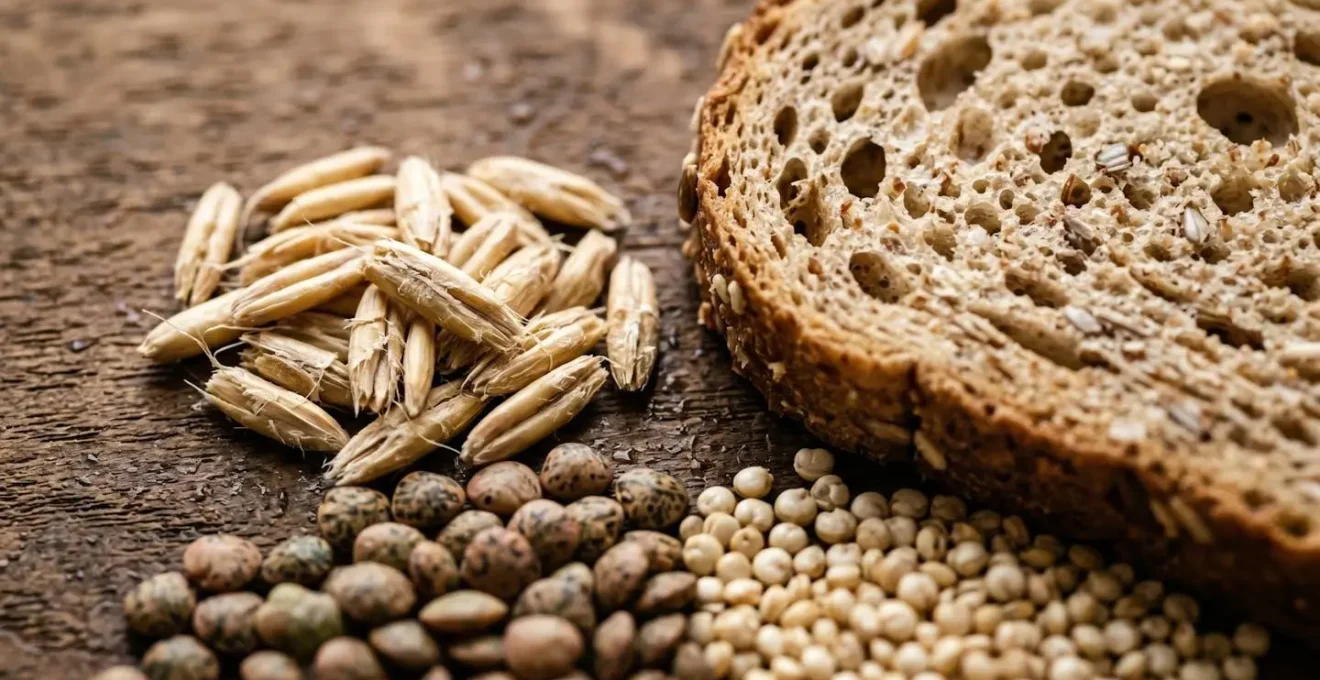
As you can see in the comparison, high-quality carbohydrates have a visible structure. The bran on whole grains, the fibrous strands in vegetables, and the dense nature of lentils are all indicators of a food that will break down slowly. Your job is to become an expert at identifying and selecting these « slow-burn » fuels. They are the only type of carbohydrate that belongs on your plate.
Animal vs. Plant Protein: Which Is Better for Sustained Energy?
The final quarter of your plate is for lean protein. Protein is critical for building your baby’s tissues and organs, and it plays a vital role in your metabolic architecture by further slowing sugar absorption and promoting satiety. The question isn’t whether to eat protein, but which type is best for sustained energy. The answer: you need both plant and animal proteins, used strategically.
Plant-based proteins, like lentils, chickpeas, and beans, are powerhouses for pregnancy. They come packaged with fiber, which, as we know, is essential for stabilizing blood sugar. This protein-fiber combination provides a very slow, sustained release of energy, making them ideal for main meals. Animal proteins like lean chicken, fish, and Greek yogurt offer high-quality, complete protein that is quickly utilized by the body. They are excellent for promoting immediate satiety and are particularly useful for snacks or post-activity recovery.
As experts from the InfantRisk Center have noted in their guidelines on managing blood sugar, protein intake is a critical piece of the puzzle:
The USDA recommends that 30% of calories come from protein, and a minimum of about 71g during pregnancy.
– InfantRisk Center, Managing Blood Sugar in Pregnancy Guidelines
This side-by-side comparison shows how to deploy different protein sources throughout your day for maximum benefit. Notice how plant sources excel in fiber, while animal sources offer unique benefits like Omega-3s or high leucine content.
| Protein Source | Protein Content (per 100g) | Fiber Content | Key Pregnancy Benefits | Optimal Timing |
|---|---|---|---|---|
| Greek Yogurt (animal) | ~10g | 0g | Fast-digesting, high leucine, calcium for bone health | Snacks, post-activity |
| Lentils (plant) | ~9g | 8g | Slow-digesting, folate (critical for fetal development), iron, blood sugar stabilization | Main meals |
| Salmon (animal) | ~20g | 0g | Omega-3 DHA for fetal brain, heme iron (highly absorbable) | Main meals, 2-3 servings/week |
| Chickpeas (plant) | ~9g | 7g | Sustained energy, combined protein-fiber-folate benefits | Main meals, salads |
| Lean Chicken Breast (animal) | ~31g | 0g | High-quality complete protein, quick satiety | Main meals, snacks |
| Tofu (plant) | ~8g | 1g | Low-fat protein, calcium, slow amino acid release | Main meals |
The Low-Carb Mistake That Can Harm Fetal Brain Growth
In the panic to control blood sugar, the most common and dangerous mistake is to drastically cut carbohydrates. Let me be clear: this is a harmful error. Your baby’s brain relies on glucose as its primary fuel source. Restricting carbohydrates too severely can compromise fetal brain development. This is not an area for guesswork; it is a scientifically established requirement.
The standard recommendation is a minimum of 175 grams of carbohydrates per day during pregnancy. However, recent research suggests this may not even be enough. Your body isn’t just fueling your brain and your baby’s brain; it’s also fueling the placenta, a metabolically active organ with significant glucose demands. When you factor this in, the real need is likely higher.
Case Study: Re-evaluating Pregnancy Carb Needs
A 2023 re-examination of carbohydrate requirements published in The American Journal of Clinical Nutrition proposed a significant update. The study calculated that on top of maternal (100g) and fetal (35g) brain needs, the placenta itself consumes approximately 36g of glucose per day. This previously overlooked component brings the total estimated average requirement to 220g of carbohydrates per day. This research confirms that at least 175 grams of carbohydrates per day is the absolute floor, not a ceiling, highlighting that adequate intake is critical not just for brain development but for placental function and nutrient transfer.
Your mission is not to eliminate carbs, but to control them. This means choosing the right kind (low-GI) and eating the right amount, spread throughout the day. Fear of carbohydrates is counterproductive. Respect for their power and necessity is the correct mindset.
How to Space Meals to Maintain Stable Glucose Levels All Day?
A perfect plate composition is useless if your meal timing is chaotic. The final piece of your metabolic architecture is a strict eating schedule. To maintain a glucose plateau and avoid spikes and crashes, you must eat like a toddler: small, balanced meals and snacks every 2-3 hours. This strategy prevents your body from becoming overly hungry, which leads to overeating and subsequent blood sugar surges. It also prevents long gaps that can cause your blood sugar to drop too low (hypoglycemia).
The day should be structured around three main meals and two to three snacks. Each eating occasion is an opportunity to reinforce your blood sugar stability. A snack is not a bag of chips; it is a mini-meal that must contain a protein or healthy fat paired with a complex carbohydrate. For example, an apple (carb) with almond butter (protein/fat). This pairing is non-negotiable.
Pay special attention to the bedtime snack. This is your « Golden Window »—a crucial opportunity to consume a protein and fat-rich snack to prevent your blood sugar from dropping overnight. This stabilizes your fasting glucose, which is often the most difficult number to control. A good bedtime snack might be cheese with whole-grain crackers or a small handful of nuts.
Your Blood Sugar Stabilization Schedule: A 6-Point Plan
- Light Breakfast: Start with a balanced meal of protein, healthy fat, and complex carbs (e.g., whole-grain toast with avocado and egg) to set a stable baseline for the day.
- Mid-Morning Snack: Prevent a pre-lunch dip by pairing a carbohydrate with protein/fat (e.g., apple slices with almond butter or Greek yogurt with berries).
- Light Lunch: Strictly adhere to the « Plate Equation »: half plate non-starchy vegetables, one-quarter lean protein, and one-quarter whole grain.
- Afternoon Snack: A balanced mini-meal is essential to bridge the gap to dinner and prevent evening overeating (e.g., hummus with vegetable sticks).
- Light Dinner: Maintain the « Plate Equation » structure. Avoid large, heavy meals that will spike your glucose while you sleep.
- Bedtime Snack (The Golden Window): Consume a protein and fat-rich snack (e.g., cheese and whole-grain crackers) to prevent overnight hypoglycemia and stabilize fasting blood sugar.
How to Prepare for the Glucose Challenge Test Without False Positives?
The one-hour glucose challenge test is a source of significant anxiety, and many women ask how they can « pass » it. The goal, however, is not to game the test but to get an accurate reading of how your body is handling glucose. Trying to « cram » with a super-low-carb diet the days before the test can backfire and even lead to a false positive by making your body overly sensitive to the glucose load. The best preparation is no last-minute preparation at all.
The most effective way to prepare is to consistently implement the metabolic architecture described in this guide for the weeks leading up to your test. By eating balanced meals, choosing low-GI carbs, and spacing your intake correctly, you are training your body to manage glucose efficiently. This stable, long-term approach will give you the most accurate and truthful result, which is what you and your doctor need.
On the day of the test, follow your doctor’s instructions precisely, which usually means fasting. Do not try any unproven « hacks » to lower your number. An accurate diagnosis is a tool. It gives you and your healthcare team the information needed to ensure a healthy pregnancy. With gestational diabetes rates on the rise— a 2025 Northwestern Medicine analysis of over 12 million U.S. births revealed a 36% increase from 2016 to 2024—proactive and accurate management has never been more critical.
How to Satisfy Sweet Cravings With Nutrient-Dense Alternatives?
Sweet cravings during pregnancy are real and intense. The « strict but supportive » approach is not to white-knuckle through them with sheer willpower, but to outsmart them with nutritionally intelligent solutions. The key is the « Sweet Pairing Technique »: if you eat something sweet, you must pair it with protein, fiber, and healthy fats to slow down its impact on your blood sugar.
An occasional small scoop of ice cream isn’t forbidden, but it must be « buffered. » Top it with chopped walnuts (fat/protein) and chia seeds (fiber) to slow its absorption. Better yet, replace high-sugar desserts with alternatives that are designed from the ground up to be both satisfying and blood-sugar-friendly. These recipes use whole foods to provide sweetness while packing in the nutrients your body needs.
Here are some approved, nutrient-dense options to satisfy your sweet tooth without sabotaging your blood sugar:
- 2-Minute Avocado-Cocoa Mousse: Blend 1 ripe avocado, 2 tbsp unsweetened cocoa powder, 1-2 tsp honey or maple syrup, and a splash of vanilla. The healthy fats and fiber from the avocado create a creamy texture and stabilize blood sugar.
- Cinnamon-Spiced Chia Seed Pudding: Mix 3 tbsp chia seeds, 1 cup unsweetened almond milk, and 1/2 tsp cinnamon. Refrigerate overnight. The soluble fiber in chia seeds forms a gel, dramatically slowing digestion.
- Frozen Greek Yogurt Bark: Spread plain Greek yogurt on a baking sheet, top with berries and chopped nuts, and freeze. This delivers a powerful dose of protein with the satisfying chill of a frozen treat.
- Apple ‘Nachos’: Slice an apple into thin rounds and top with almond butter and a sprinkle of cinnamon. This classic pairing of fruit (carb) and nut butter (protein/fat) is a perfect example of the Sweet Pairing Technique.
These are not « diet » foods; they are smart, delicious strategies. They deliver pleasure while adhering to the core principles of your metabolic architecture.
Key takeaways
- The Plate Equation is Non-Negotiable: Half your plate must be non-starchy vegetables at lunch and dinner to control glucose absorption with fiber.
- Meet Your Carb Quota, Smartly: You need at least 175-220g of low-glycemic carbs daily for fetal brain health. Never severely restrict carbs.
- Timing is Everything: Eat small, balanced meals and snacks every 2-3 hours, including a protein-rich bedtime snack, to maintain a stable glucose plateau.
Prenatal Nutrition for Maternal Health: Avoiding Anemia and Fatigue Through Diet Alone?
Constant fatigue during pregnancy is often blamed on hormones or poor sleep, but your diet plays a massive role. Blood sugar instability is a primary culprit, causing energy crashes. However, another common and preventable cause is nutritional anemia. As UCSF Health notes, this is a predictable physiological change:
During the last half of pregnancy, your body makes more red blood cells, which can cause anemia.
– UCSF Health, Diabetes During Pregnancy: Diet Tips
To support this increased red blood cell production, your body requires more iron, folate, and B12. A deficiency in these key nutrients leads to anemia, with its classic symptom of deep, persistent fatigue. The good news is that a diet built on our metabolic architecture principles is naturally rich in the nutrients needed to combat both fatigue and anemia. Lentils and spinach, for example, are not only excellent sources of fiber and plant-based protein but are also packed with non-heme iron and folate.
The following table outlines the essential nutrients for energy and red blood cell production and shows how they are already integrated into your blood-sugar-friendly diet. This demonstrates how a well-structured eating plan creates a cascade of positive effects, simultaneously managing glucose, fighting fatigue, and preventing anemia.
| Nutrient | Role in Preventing Anemia/Fatigue | Food Sources | Blood Sugar Benefit |
|---|---|---|---|
| Iron (Heme) | Red blood cell production, oxygen transport (highly absorbable) | Lean red meat, poultry, fish | Paired with vegetables stabilizes energy |
| Iron (Non-heme) | Red blood cell production (requires Vitamin C for absorption) | Lentils, spinach, beans, fortified whole grains | High fiber slows glucose absorption |
| Vitamin C | Enhances iron absorption from plant sources | Citrus fruits, bell peppers, strawberries, broccoli | Low glycemic impact when paired with protein |
| Folate (Vitamin B9) | Red blood cell formation, prevents neural tube defects | Leafy greens (spinach, kale), lentils, beans, fortified grains | Fiber-rich sources provide sustained energy |
| Vitamin B12 | Red blood cell production, nervous system function | Animal products (meat, fish, dairy, eggs), fortified plant milks | Protein-rich sources support satiety |
| Magnesium | Cofactor for glucose metabolism, reduces insulin resistance | Leafy greens, nuts, seeds, whole grains, legumes | Directly improves insulin sensitivity |
By focusing on a nutrient-dense, whole-foods diet, you are not just managing one condition; you are building a comprehensive support system for your entire body. The energy and vitality you gain are direct results of this intelligent approach to nutrition.
The power to manage your blood sugar, control your weight, and fight fatigue is on your plate. This is not a passive journey; it is an active process of building a system that serves you and your baby. Start building your metabolic architecture with your very next meal.