
The key to a dairy-free pregnancy isn’t just finding calcium substitutes, but mastering how your body absorbs it.
- Vitamin D is non-negotiable for unlocking calcium from any source, acting as the gatekeeper for absorption.
- Cooking methods (like boiling greens to reduce oxalates) and strategic meal timing dramatically increase how much calcium you actually get.
Recommendation: Focus on a strategy of nutrient synergy (pairing calcium with Vitamin D) and separation (avoiding inhibitors like caffeine and iron at the same meal) to build a robust calcium safety net for you and your baby.
Discovering you’re pregnant is a joyous time, but for a mother-to-be who is lactose intolerant, that joy can be tinged with a persistent worry: « Am I getting enough calcium for my baby’s development? » You’ve heard the advice—calcium is critical for building tiny bones, teeth, and a healthy heart. When the most well-known sources like milk, cheese, and yogurt are off the table, it’s natural to feel concerned that you might fall short, potentially impacting your baby’s health or even your own bone density.
The conventional wisdom often points towards simple swaps: drink fortified plant milk or eat more leafy greens. While this is a good start, it barely scratches the surface. The truth is, meeting your calcium needs without dairy isn’t just a matter of substitution. It’s about understanding the science of bioavailability—how much of the calcium you consume is actually absorbed and utilized by your body. Many common foods and habits, even healthy ones, can inadvertently hinder this process.
This is where our approach differs. We’re moving beyond a simple list of alternatives. This guide will empower you with a deeper, more strategic understanding of calcium absorption. We will explore the crucial role of vitamin « co-factors, » the hidden « anti-nutrients » in plant foods that can block absorption, and the importance of nutrient timing. By mastering these principles, you can build a truly effective, dairy-free calcium strategy that ensures both you and your baby receive everything you need to thrive during this incredible journey. You’ll learn not just what to eat, but how to make every milligram count.
To navigate this essential topic, we’ve structured this guide to address your most pressing questions. From understanding the fundamental science to practical meal strategies, here’s a clear path to building your calcium confidence.
Summary: A Practical Guide to Dairy-Free Calcium in Pregnancy
- Why Baby Takes Calcium from Your Bones if You Don’t Eat Enough Dairy?
- Why Vitamin D Is Essential for Calcium Absorption in Pregnancy?
- How to Cook Kale and Collard Greens to Reduce Oxalates and Boost Calcium?
- Almond vs. Soy Milk: Which Alternative Offers Better Calcium Fortification?
- Iron-Rich Proteins for Pregnancy: Best Plant-Based Sources When Meat Causes Nausea?
- The Caffeine Mistake That Leaches Calcium From Your Bones
- Animal vs. Plant Protein: Which Is Better for Sustained Energy?
- When to Take Calcium Supplements: Morning or Night for Best Results?
Why Baby Takes Calcium from Your Bones if You Don’t Eat Enough Dairy?
It’s a common concern, and the underlying biology is a powerful example of nature prioritizing the next generation. Think of your bones as a « calcium bank. » During pregnancy, your baby needs a constant, significant supply of calcium to develop their skeleton, heart, nerves, and muscles. If your dietary intake of calcium is insufficient to meet these high demands, your body has a brilliant, albeit costly, backup plan. It will make a « withdrawal » directly from your own skeletal system to ensure the baby gets what it needs, no matter what.
This physiological process is non-negotiable. Your baby’s development takes precedence. While this ensures your baby thrives, it can leave your own « calcium bank » depleted. In fact, studies indicate that women may lose 3% to 5% of their bone mass during breastfeeding if calcium intake isn’t adequate, a process that can begin during pregnancy. This is why a proactive approach is so crucial for lactose-intolerant mothers. It’s not just about the baby; it’s about protecting your own long-term bone health.
However, this shouldn’t be a source of panic. It’s a call to strategic action. Research from the National Center for Biotechnology Information reassures us that the crucial factor is total calcium intake, not its source. A well-planned, dairy-free diet can absolutely provide enough calcium to satisfy both your baby’s needs and protect your own bone reserves. The key is understanding how to build that robust, non-dairy plan effectively, which is exactly what we will explore.
Why Vitamin D Is Essential for Calcium Absorption in Pregnancy?
If calcium is the brick needed to build your baby’s strong bones, then Vitamin D is the master builder that carries each brick to the construction site. Without an adequate supply of Vitamin D, the calcium you carefully consume from food and supplements can’t be effectively absorbed from your intestines into your bloodstream. It’s a non-negotiable partnership; one is largely ineffective without the other. This nutrient synergy is the absolute foundation of any successful calcium strategy, especially during pregnancy.
This vitamin, which functions more like a hormone, plays a critical role in maintaining the right balance of calcium and phosphate in your body. As a research team highlighted in a study in *Frontiers in Pediatrics*, Vitamin D facilitates intestinal calcium absorption and is essential for bone mineralization and skeletal development. When Vitamin D levels are low, your body’s ability to absorb calcium can plummet, no matter how many calcium-rich foods you eat. This makes paying attention to your Vitamin D status just as important as tracking your calcium intake.
During pregnancy, the recommended daily intake of Vitamin D increases to support both maternal bone health and fetal development. While some Vitamin D can be synthesized by your skin through sun exposure, this is often insufficient and unreliable due to factors like season, latitude, skin pigmentation, and sunscreen use. Therefore, dietary sources and supplementation become vital. Fatty fish (like salmon) are a great source, but for those on a plant-based diet, fortified foods like plant milks, cereals, and orange juice are key. Most prenatal vitamins also contain a significant dose of Vitamin D, but it’s essential to check the label and discuss your specific needs with your healthcare provider to ensure you’re getting enough to make your calcium intake count.
How to Cook Kale and Collard Greens to Reduce Oxalates and Boost Calcium?
Leafy greens like kale, spinach, and collard greens are often touted as excellent dairy-free sources of calcium. While they do contain a good amount of the mineral, there’s a catch: they also contain compounds called oxalates. These are naturally occurring « anti-nutrients » that bind to calcium in the gut, forming an insoluble compound that your body cannot absorb. This means that even if a food is high in calcium on paper, a significant portion of it may be unavailable to you and your baby if it’s also high in oxalates. Spinach, for example, is notoriously high in oxalates, making its calcium poorly bioavailable.
The good news is that you don’t have to give up on these nutrient-dense vegetables. The solution lies in how you prepare them. Oxalates are water-soluble, which means simple cooking methods can dramatically reduce their content and « unlock » the calcium. Research has shown that some cooking techniques are far more effective than others. For instance, a study published in the *Journal of Agricultural and Food Chemistry* found that boiling can reduce soluble oxalate content by 30-87%, proving much more effective than steaming, which only offered a 5-53% reduction. The key is that the oxalates leach into the cooking water, which you then discard.
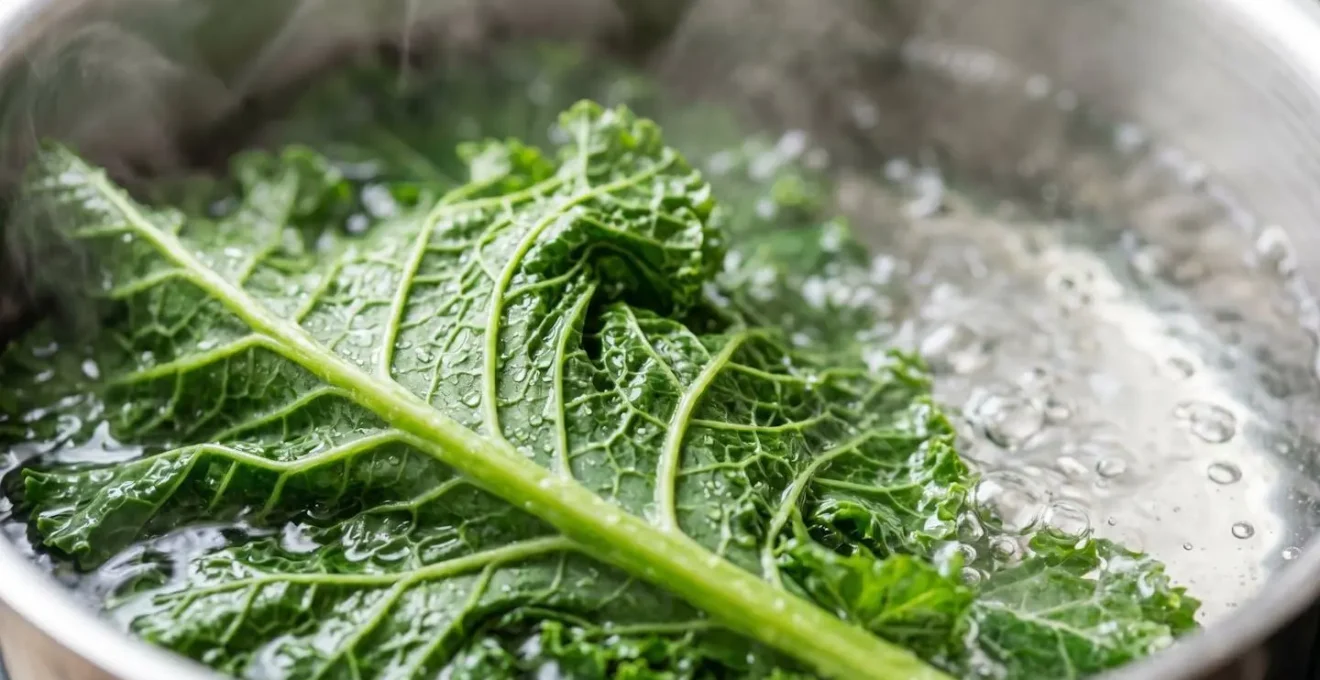
This scientific insight leads to a simple, practical kitchen technique: blanching. By briefly boiling your greens and then discarding the water, you effectively wash away a large portion of the oxalates while retaining much of the calcium and other valuable nutrients. This small extra step can make a huge difference in how much calcium your body actually absorbs from your meal.
Your Action Plan: Unlocking Calcium in Leafy Greens
- Preparation: Bring a large pot of water to a rolling boil and prepare a separate bowl of ice water for the « shock. »
- Maximize Surface Area: Cut your greens (like kale or collard greens) into 1-2 cm pieces to expose more of the plant’s surface to the water.
- Blanch: Submerge the greens in the boiling water for just 2-3 minutes. You’ll see them turn a vibrant green.
- Shock & Drain: Immediately use a slotted spoon to transfer the greens to the ice-water bath. This stops the cooking process and preserves their texture and color. Then, drain thoroughly.
- Discard the Water: This is the most important step! The cooking water now contains the leached oxalates and must be discarded. Do not reuse it for soups or sauces. The blanched greens are now ready to be used in any recipe.
Almond vs. Soy Milk: Which Alternative Offers Better Calcium Fortification?
For anyone avoiding dairy, fortified plant milks are a cornerstone of a calcium-rich diet. The two most popular choices, almond and soy milk, often sit side-by-side on the shelf, but their nutritional profiles are surprisingly different, especially for the needs of pregnancy. While both can be excellent sources of calcium, the « better » choice depends on what else you need from your milk alternative. The key is to always choose a version that is explicitly labeled « fortified » with calcium and Vitamin D, as the unfortified versions contain very little of either.
When comparing the two, soy milk often has a distinct advantage for pregnancy due to its protein content. It’s one of the few plant-based sources that provides a « complete » protein, containing all the essential amino acids your body needs to build everything from your baby’s organs to your own uterine tissues. Almond milk, in contrast, is very low in protein. While both fortified versions can deliver a similar amount of calcium (typically 300-450 mg per cup, rivaling cow’s milk), soy milk provides this calcium alongside a significant protein boost.
This table breaks down the key nutritional differences to help you make an informed choice. Note that the bioavailability of calcium carbonate in fortified soymilk has been shown to be equivalent to that of cow’s milk, making it a reliable substitute.
| Nutrient | Fortified Soy Milk (per cup) | Fortified Almond Milk (per cup) | Pregnancy Relevance |
|---|---|---|---|
| Protein | 7-8 grams (complete amino acids) | 1 gram (incomplete) | Soy provides essential protein for fetal growth |
| Calcium | 300 mg (fortified) | 300-450 mg (fortified) | Both can meet needs when fortified |
| Calcium Type | Calcium carbonate or tricalcium phosphate | Calcium carbonate (most common) | Carbonate is cost-effective; citrate better absorbed |
| Calories | 80-110 kcal | 30-40 kcal | Soy offers more energy density |
| Vitamin D (fortified) | Typically added | Typically added | Essential for calcium absorption |
| Phytoestrogens | Contains isoflavones | None | Safe during pregnancy at normal intake levels |
Ultimately, both fortified soy and almond milk can be valuable tools in your dairy-free arsenal. If your diet is already rich in other protein sources, fortified almond milk is a great low-calorie option for getting calcium and Vitamin D. However, if you’re looking for a nutritional powerhouse that delivers protein and calcium in one go, fortified soy milk is often the superior choice during pregnancy.
Iron-Rich Proteins for Pregnancy: Best Plant-Based Sources When Meat Causes Nausea?
Pregnancy increases your need for iron, a mineral vital for producing hemoglobin, which carries oxygen to you and your baby. However, many women experience nausea or aversions to meat, a primary source of easily absorbed heme iron. This leads them to plant-based (non-heme) iron sources like lentils, beans, and spinach. While these are excellent choices, they introduce a nutritional puzzle: calcium and iron are antagonists. They compete for the same absorption pathways in your gut. This means that if you consume a high-iron meal and a high-calcium meal (or supplement) at the same time, your body will absorb less of both.
This is a critical piece of information for pregnant women, who need to maximize their intake of both minerals. The solution isn’t to choose one over the other, but to be strategic about timing. As healthcare resources often advise:
Calcium competes with iron and zinc for absorption. If you take these supplements, space them at least two hours apart.
– Viactiv Health Resources, Timing Matters: When Should You Take Your Calcium Supplement?
This principle of separation applies to meals as well as supplements. Instead of having a lentil curry (high in iron) and washing it down with a glass of fortified plant milk (high in calcium), it’s far more effective to separate them. Plan your meals to have « iron-focused » and « calcium-focused » windows throughout the day. For example, you can boost iron absorption at breakfast by pairing iron-fortified oatmeal with a Vitamin C source like orange juice, while saving your calcium-rich smoothie for a mid-morning or afternoon snack. This meal separation strategy ensures you’re creating the optimal conditions for each mineral to be absorbed without interference.
The following table provides a sample meal plan that puts this nutrient separation strategy into practice, helping you build a framework for your own daily routine.
| Meal Time | Focus Nutrient | Sample Meal | Key Strategy |
|---|---|---|---|
| Breakfast (7-8 AM) | Iron-Focused | Fortified oatmeal with dried apricots and orange juice | Pair iron with Vitamin C; avoid calcium-rich foods |
| Mid-Morning Snack (10-11 AM) | Calcium-Focused | A glass of fortified soy milk | 2-hour gap after iron meal |
| Lunch (12-1 PM) | Iron-Focused | Lentil curry with spinach and tomatoes (Vitamin C) | Separate from calcium intake |
| Afternoon Snack (3-4 PM) | Calcium-Focused | Handful of almonds and an orange | Pair calcium with a neutral food |
| Dinner (6-7 PM) | Neutral/Protein | Tofu and vegetable stir-fry (Tofu is moderate in both) | Focus on general nutrition |
| Evening (9 PM) | Calcium-Focused | Calcium supplement with a small glass of water | Ideal timing for supplements, away from iron-rich dinner |
The Caffeine Mistake That Leaches Calcium From Your Bones
For many, a morning cup of coffee or tea is a non-negotiable ritual. While moderate caffeine intake (under 200mg per day) is generally considered safe during pregnancy, it’s important to understand its subtle but significant impact on your calcium balance. Caffeine acts as a mild diuretic, which can increase the amount of calcium that is flushed out of your body through urine. More importantly, it can also interfere with how much calcium you absorb from a meal. It’s a double-edged sword: it slightly reduces what you take in and slightly increases what you lose.
While the effect of a single cup of coffee is small, the habit can add up, especially if you’re not consuming enough calcium to begin with. The National Institutes of Health notes that the net absorption of dietary calcium is reduced to a small extent by caffeine. The mistake isn’t having the coffee itself, but *when* you have it. Consuming your caffeinated beverage at the same time as your calcium-rich meal or supplement creates a direct conflict, minimizing the benefits of your carefully planned intake. A simple timing shift can make all the difference.
The goal is to create a buffer zone. By consuming your coffee or tea at least 30-60 minutes before or after your calcium-focused meal, you allow your body to absorb the mineral without interference. This small change helps ensure that the calcium from your fortified cereal or tofu scramble is put to good use building your baby’s skeleton, not being washed away by your morning latte. Here are some practical swaps and strategies to protect your calcium stores:
- Timing Strategy: Consume caffeinated beverages at least 30 minutes before or after calcium-rich meals or supplements.
- Compensation Rule: For every cup of coffee, consider adding an extra small, calcium-rich snack later in the day, like a handful of almonds (about 75mg of calcium).
- Morning Swap: If you enjoy a warm morning drink, try swapping coffee for a caffeine-free herbal tea (like peppermint or chamomile) alongside your breakfast.
- Hydration Choice: Replace caffeinated sodas, which often contain phosphoric acid that can also interfere with calcium, with sparkling water infused with lemon or berries.
Animal vs. Plant Protein: Which Is Better for Sustained Energy?
Protein is another crucial nutrient during pregnancy, providing the building blocks for your baby’s growth and giving you the sustained energy needed to power through your day. When it comes to energy, the source of your protein matters. Animal proteins are digested relatively quickly, providing a fast release of energy. Plant proteins, on the other hand, almost always come packaged with fiber. This fiber slows down digestion, leading to a more gradual release of glucose into the bloodstream. The result is more stable blood sugar levels and more sustained energy, helping you avoid those sharp energy spikes and crashes.
For a lactose-intolerant pregnant woman, this is where a strategic approach to plant-based eating becomes incredibly powerful. You can seek out « double-duty champions »—plant foods that are rich in both protein and calcium. By incorporating these foods, you’re not just meeting two critical nutrient needs at once; you’re also promoting stable energy levels throughout your day. This synergy makes your diet more efficient and effective.
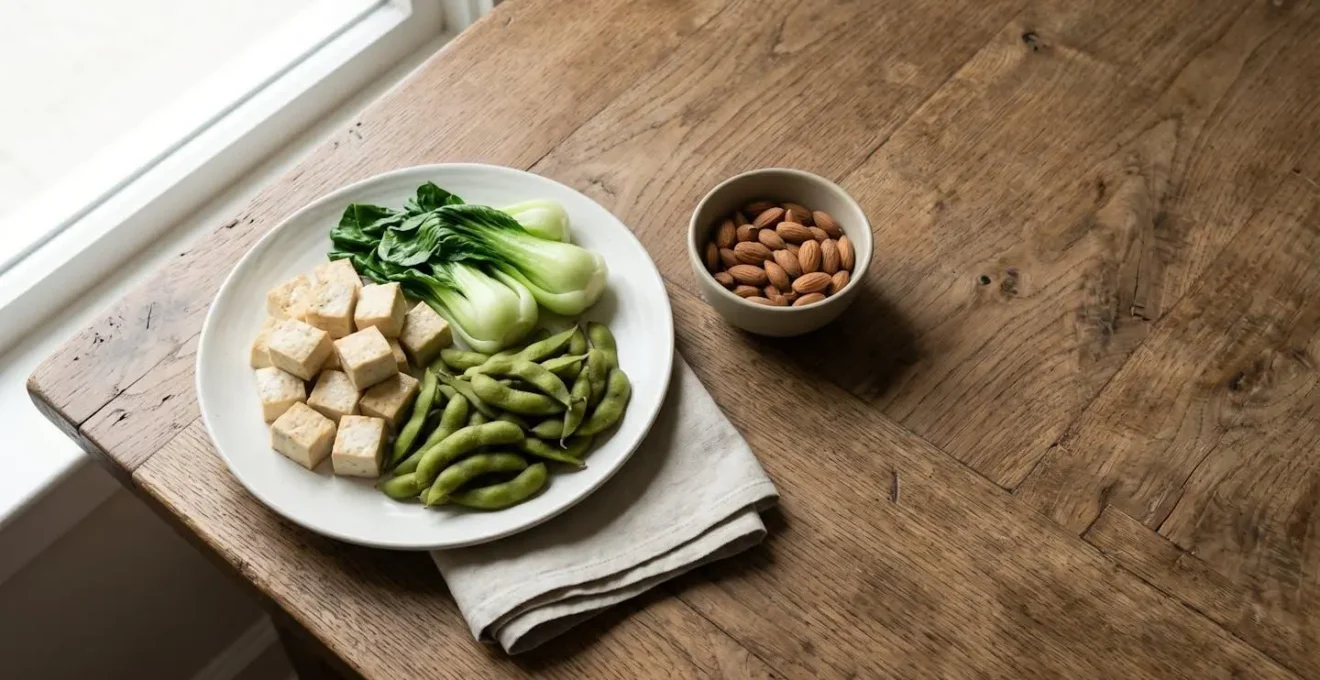
Focusing on these multitasking foods can simplify your meal planning and give you confidence that you’re covering your bases. For example, a stir-fry with calcium-set tofu and a side of edamame isn’t just a delicious meal; it’s a powerhouse of complete protein, bioavailable calcium, and fiber for lasting energy. Here are some of the best plant-based foods that deliver both protein and calcium:
- Calcium-set tofu: A 4-oz serving can provide 8-10g of protein and 200-400mg of calcium. Check the label for « calcium sulfate » in the ingredients.
- Edamame (cooked): One cup offers a massive 17g of protein and nearly 100mg of calcium, plus essential folate.
- Almonds: An ounce (about 23 almonds) gives you 6g of protein and 75mg of calcium, along with healthy fats.
- Chia seeds: Two tablespoons contain 5g of protein and about 179mg of calcium, plus beneficial omega-3 fatty acids.
- White beans (cooked): A cup provides 17g of protein and 161mg of calcium, making them a fantastic addition to soups and salads.
Key Takeaways
- It’s Not Just What, It’s How: True calcium sufficiency without dairy hinges on bioavailability—optimizing absorption by pairing it with Vitamin D and avoiding inhibitors.
- Timing is Everything: Separate your calcium intake from iron-rich foods and caffeinated beverages by at least two hours to prevent nutrient competition and maximize absorption of both.
- Smart Cooking Unlocks Nutrients: Simple techniques like boiling leafy greens can drastically reduce calcium-blocking oxalates, making the nutrients in your food more accessible to you and your baby.
When to Take Calcium Supplements: Morning or Night for Best Results?
Even with a well-planned diet, your doctor may recommend a calcium supplement to ensure you’re meeting the high demands of pregnancy. But simply taking a pill isn’t enough; *when* and *how* you take it can significantly impact its effectiveness. Your body has a limit to how much calcium it can absorb at one time. This is often referred to as the « absorption ceiling. » If you take a large dose (e.g., 1000 mg) all at once, a large portion of it will simply pass through your system unused.
Research from the NIH confirms this, showing that absorption from supplements is highest with doses of 500 mg or less at a time. This science leads to a clear and practical strategy: split your dose. If your doctor recommends 1000 mg of supplemental calcium per day, you will achieve far better absorption by taking one 500 mg tablet in the morning and another in the evening, rather than both at once. This approach works with your body’s natural limits to maximize the benefit of each dose.

The next question is whether morning or night is better. There isn’t a single definitive answer, but there are strategic considerations. Taking one dose in the morning ensures you have calcium available throughout your active day. Taking the second dose in the evening or at bedtime is also a popular and effective strategy. Since bone remodeling and calcium turnover continue while you sleep, providing a supply of calcium before bed may help protect your « bone bank » during the overnight fast. The most important rule, however, is consistency and separation from your iron supplement, as discussed earlier.
The optimal plan is one that you can stick to. For most, a split-dose strategy—one part in the morning and one in the evening, both ideally with a small amount of food to aid absorption and reduce stomach upset—offers the best results. Always discuss the specific type (e.g., citrate vs. carbonate) and dosage of your supplement with your healthcare provider to tailor the plan to your individual needs.
By integrating these strategies—understanding your body’s needs, optimizing absorption, and making smart, timed choices—you can confidently build a dairy-free diet that fully supports a healthy pregnancy. To create your personalized calcium plan, start by discussing these approaches and any potential supplements with your healthcare provider or a registered dietitian.