
The sudden ‘baby blues’ around day three are not a personal failing but a predictable biochemical withdrawal from pregnancy’s high-dose hormones, primarily progesterone.
- This « hormone crash » temporarily disrupts the brain’s mood-regulating chemistry, causing anxiety and tearfulness.
- Symptoms are temporary and usually resolve within two weeks, distinguishing them from postpartum depression (PPD).
Recommendation: Support your body’s recovery with targeted nutrition like omega-3s, strategic sleep, and by understanding the clear signs that differentiate normal adjustment from a more serious condition.
The first few days after birth are a whirlwind of joy, exhaustion, and profound love. Then, often around day three, something shifts. Without warning, a wave of sadness hits. You might find yourself crying over a misplaced swaddle or feeling a sudden spike of anxiety for no discernible reason. For partners, seeing this abrupt change can be confusing and alarming. The common refrain is, « It’s just your hormones, » or « It’s the baby blues, it will pass. » While well-intentioned, this advice often falls short because it fails to explain the powerful biological process at play.
This isn’t just a vague emotional state; it’s a physiological event. The key to navigating this period is not to simply wait it out, but to understand the science behind it. What if the intense emotions weren’t a sign of weakness, but a direct and predictable response to a massive hormonal shift? This is the « hormone withdrawal, » a biochemical blueprint that follows a specific timeline. Viewing the baby blues through this lens transforms the experience from a confusing emotional storm into a manageable physiological process.
This article, guided by the perspective of an endocrinologist, will demystify this « hormone crash. » We will explore exactly why your body is reacting this way, how to provide it with the physiological first-aid it needs, and how to clearly distinguish the temporary blues from the more persistent signs of postpartum depression or anxiety. By understanding the ‘why,’ you can more effectively implement the ‘how’ to cope and recover.
To navigate this complex topic, we will break down the key hormonal, nutritional, and psychological components. The following sections provide a clear roadmap to understanding and managing the postpartum emotional landscape.
Summary: A Guide to the Postpartum Hormone Crash
- Why Progesterone Withdrawal Causes Anxiety Spikes in the First Week?
- How to Use Omega-3s to Stabilize Mood Swings Postpartum?
- Baby Blues vs. PPD: Which Symptoms Persist Beyond 2 Weeks?
- The Sleep Deprivation Mistake That Exacerbates Hormonal Imbalances
- How to Treat Postpartum Hair Loss Without Expensive Products?
- Why Omega-3s Reduce Postpartum Inflammation and Speed Up Recovery?
- Zoloft or Therapy: Which Treatment Path Is Faster for PPA Relief?
- Postpartum Anxiety or Just New Mom Nerves? How to Tell the Difference Before It Escalates
Why Progesterone Withdrawal Causes Anxiety Spikes in the First Week?
During pregnancy, the placenta acts as a hormone factory, producing levels of progesterone that are hundreds of times higher than normal. This hormone is crucial for maintaining the pregnancy, but it also has a powerful secondary effect on the brain. Progesterone is metabolized into allopregnanolone (ALLO), a neurosteroid that acts as a potent anti-anxiety agent. Think of ALLO as the brain’s natural Valium; it enhances the activity of GABA, the primary neurotransmitter responsible for calming the nervous system and reducing feelings of stress.
The moment the placenta is delivered, this hormone factory shuts down. The result is a dramatic and rapid drop in both progesterone and ALLO levels. As researchers on progesterone metabolites note, this hormonal plunge has a direct impact on brain chemistry:
Allopregnanolone directly interacts with gamma-aminobutyric acid type A (GABA-A) receptors… and induces significant anti-depressant, anti-stress, sedative, and anxiolytic effects. Postpartum depression is caused by a rapid drop in hormones and can be instantly reversed by the administration of allopregnanolone.
– Researchers on progesterone metabolites, Semantic Scholar – Progesterone and Its Metabolites Play a Beneficial Role
This sudden withdrawal of the brain’s primary calming agent is what we call the « progesterone plunge. » The nervous system, which had become accustomed to this high level of sedative support, is suddenly left exposed. This biochemical shift is the direct cause of the tearfulness, irritability, and anxiety spikes that characterize the baby blues. It’s not a personal failing; it’s a physiological withdrawal. Indeed, scientific research demonstrates that ALLO concentrations, after peaking in late pregnancy, decline rapidly right after delivery, leaving the brain temporarily vulnerable.
How to Use Omega-3s to Stabilize Mood Swings Postpartum?
If the progesterone plunge leaves the brain’s chemistry temporarily unbalanced, providing the right raw materials for recovery is a form of physiological first-aid. This is where omega-3 fatty acids, particularly EPA (eicosapentaenoic acid) and DHA (docosahexaenoic acid), play a critical role. Your brain is approximately 60% fat, and these specific fats are essential building blocks for the membranes of your brain cells (neurons). A fluid, healthy cell membrane allows neurotransmitters like serotonin and dopamine to dock and send signals effectively.
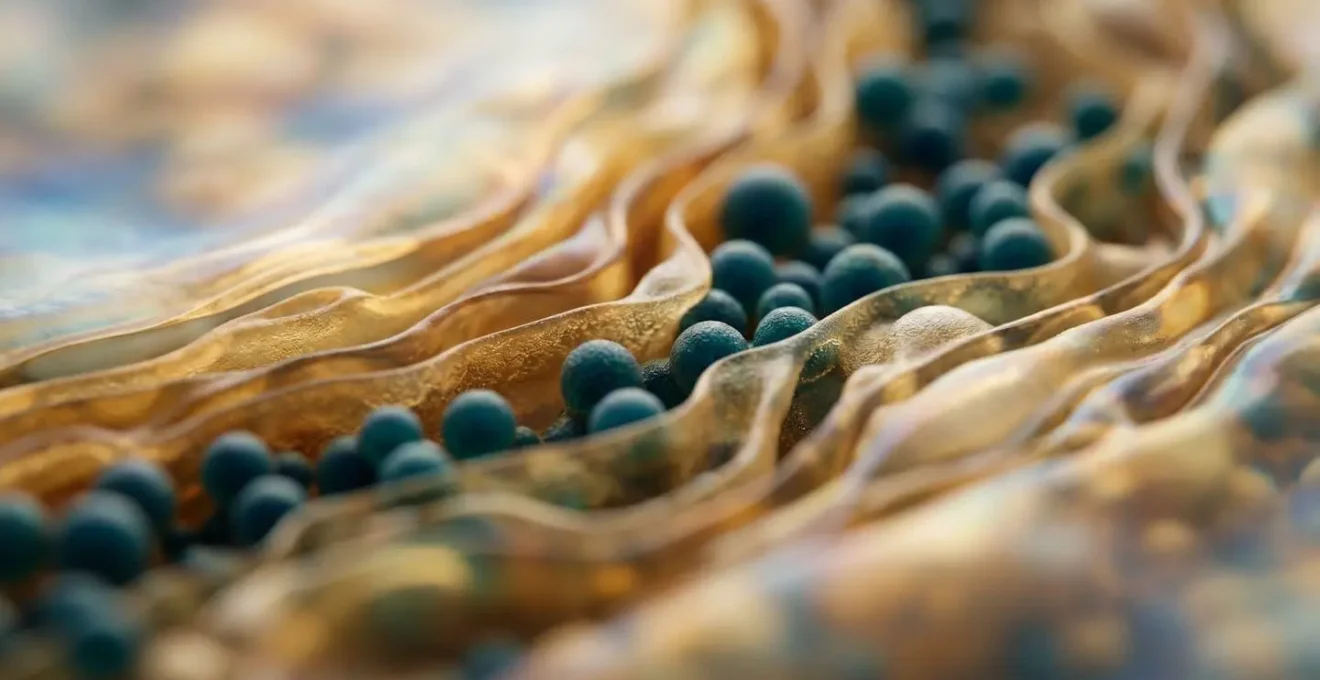
Postpartum, the body is often depleted of omega-3s, as a significant amount is transferred to the baby during pregnancy for its brain development. Replenishing these stores can help stabilize mood by supporting better neurotransmitter function. The illustration below gives a conceptual view of how these fatty acids integrate into the cellular structure, promoting communication and fluidity.
Not all omega-3s are created equal for mood support. While DHA is crucial for brain structure, EPA has more direct anti-inflammatory and antidepressant effects. In fact, a 2020 meta-analysis in Translational Psychiatry found that formulations with a higher ratio of EPA to DHA (≥1.5) had significant efficacy in managing postpartum depression with few side effects. To ensure you are supplementing effectively, following an evidence-based protocol is key.
Action Plan: Implementing Omega-3s for Postpartum Mood Support
- Choose an EPA-dominant formulation: Look for a supplement with an EPA to DHA ratio greater than 2:1, as EPA provides more direct antidepressant effects for maternal mood.
- Target a therapeutic dosage: Aim for 1-2 grams of combined EPA+DHA daily. For mood regulation specifically, ensure you are getting at least 1 gram of EPA.
- Verify third-party testing: Select brands that provide a certificate of analysis, confirming the product is free from heavy metals like mercury and other environmental contaminants.
- Consider the molecular form: Triglyceride or phospholipid forms of omega-3s may offer better absorption than ethyl ester forms, which is particularly beneficial during lactation.
- Time your supplement strategically: Take your omega-3 supplement with a meal that contains some fat to significantly enhance absorption and minimize any potential fishy aftertaste.
Baby Blues vs. PPD: Which Symptoms Persist Beyond 2 Weeks?
It’s crucial to understand that the « baby blues » and postpartum depression (PPD) are not the same condition. The baby blues are an extremely common, short-term adjustment reaction tied directly to the hormone crash. According to CDC data, up to 80% of women experience baby blues, while a smaller but significant portion—about 1 in 8—develop the more severe and persistent symptoms of PPD. The key differentiator between the two is time and intensity.
The baby blues typically begin 2-3 days after birth, peak around day 5, and resolve on their own within two weeks. While you may feel tearful and moody, you can still care for your baby and experience moments of joy. Postpartum depression, however, persists beyond that two-week mark. It involves a pervasive and severe low mood, an inability to feel pleasure (anhedonia), and can significantly impair your ability to function and bond with your baby. The following table from Johns Hopkins Medicine breaks down the critical differences.
| Characteristic | Baby Blues | Postpartum Depression (PPD) |
|---|---|---|
| Onset | 2-3 days postpartum | Within first 3 months, can emerge up to 1 year postpartum |
| Duration | Resolves within 2 weeks | Persists beyond 2 weeks, can last months or years without treatment |
| Prevalence | 70-80% of new mothers | 10-15% of new mothers |
| Symptom Intensity | Mild mood swings, tearfulness | Severe, persistent sadness, anhedonia (inability to feel pleasure) |
| Functional Impairment | Minimal—able to care for baby and self | Significant—difficulty sleeping, eating, bonding with baby, performing daily tasks |
| Emotional Quality | Ups and downs; moments of joy still present | Pervasive hopelessness, worthlessness, persistent low mood |
| Treatment Needed | Support, rest, reassurance (resolves naturally) | Professional treatment: therapy and/or medication |
This two-week window is your most important clinical marker. If symptoms of sadness, anxiety, or hopelessness are not improving or are worsening after two weeks, it is no longer within the scope of the baby blues and professional help should be sought. Recognizing this timeline is the first step toward getting the right support.
The Sleep Deprivation Mistake That Exacerbates Hormonal Imbalances
« Sleep when the baby sleeps » is perhaps the most common piece of advice given to new parents, yet it’s often the hardest to follow. The critical mistake many new mothers make is not simply the lack of sleep, but the attempt to « power through » on chronically fragmented sleep. Postpartum sleep isn’t just reduced; it’s shattered. Research indicates that new moms often get just 5-6 hours of fragmented sleep in the first few months, woken every one to three hours.
This pattern of sleep fragmentation does more than just cause fatigue; it wreaks havoc on your hormonal system, particularly your cortisol rhythm. Cortisol, the body’s primary stress hormone, should naturally be highest in the morning and lowest at night. Fragmented sleep flattens this curve, leading to elevated cortisol levels throughout the day and night. Persistently high cortisol interferes with the natural re-regulation of estrogen and progesterone, prolonging the hormonal imbalance and exacerbating feelings of anxiety and being « wired and tired. »
The strategic error is treating all sleep as equal. The goal shouldn’t be to just grab a 20-minute nap here and there while trying to get chores done. The priority must be to create opportunities for at least one consolidated 3-4 hour block of sleep per 24 hours. This allows the body to complete a full sleep cycle and begin to reset its cortisol rhythm. This might mean a partner takes over a feeding entirely, or you prioritize sleep over all non-essential tasks. Protecting a consolidated sleep window is a direct intervention to help your hormones rebalance, making it one of the most powerful tools against lingering baby blues.
How to Treat Postpartum Hair Loss Without Expensive Products?
Around three to six months postpartum, many women are alarmed to see a significant increase in hair shedding. This phenomenon, known as telogen effluvium, is another direct consequence of the postpartum hormone drop. During pregnancy, high estrogen levels keep hair in the growing (anagen) phase for longer, leading to thicker, more luscious hair. Once estrogen levels plummet after birth, a large number of hairs simultaneously enter the resting (telogen) phase and are then shed a few months later. While this process is normal and temporary, its severity can be amplified by underlying nutritional deficiencies.
Before reaching for expensive shampoos or treatments, the most effective first step is to look inward at your nutritional status. One of the most common, yet often overlooked, culprits behind excessive postpartum hair loss is low iron stores. As clinical guidelines on the topic state, the issue often goes deeper than just standard anemia.
Many new mothers are anemic, but even with normal hemoglobin, low ferritin stores (below 50-70 ng/mL) can trigger significant hair shedding.
– Clinical guidelines on postpartum telogen effluvium, Medical guidance on iron storage and hair loss
Ferritin is the protein that stores iron in your body. Blood loss during delivery and the demands of recovery can deplete these stores. A simple blood test can check your ferritin levels. If they are low, focusing on an iron-rich diet (leafy greens, red meat, legumes) and considering a doctor-recommended iron supplement can be the most effective way to slow the shedding and support healthy regrowth from within. This addresses the root cause rather than just treating the symptom.

Why Omega-3s Reduce Postpartum Inflammation and Speed Up Recovery?
The benefits of omega-3 fatty acids postpartum extend beyond mood stabilization; they are powerful agents in managing the body’s physical recovery. Childbirth, whether vaginal or cesarean, is a major physical event that triggers a significant inflammatory response. This inflammation is a necessary part of healing, but when it becomes chronic or excessive, it can hinder recovery, increase pain, and contribute to feelings of fatigue and malaise.
Omega-3s, particularly EPA and DHA, play a direct role in regulating this inflammatory process. They are the precursors to signaling molecules called eicosanoids. While some eicosanoids derived from other fats in the diet are pro-inflammatory, those derived from EPA and DHA have potent anti-inflammatory effects. They essentially help the body turn down the volume on the inflammatory response once the initial healing phase is underway.
This mechanism is crucial for postpartum recovery. By helping to resolve inflammation more efficiently, omega-3s can contribute to reduced soreness, faster tissue repair, and an overall greater sense of well-being. As research published in Translational Psychiatry demonstrates that both DHA and EPA are precursors to these anti-inflammatory compounds, with EPA showing particularly strong effects. This connection between diet and inflammation highlights how nutritional support is not just about calories, but about providing the specific biochemical tools your body needs to heal itself from the inside out.
Zoloft or Therapy: Which Treatment Path Is Faster for PPA Relief?
When postpartum anxiety (PPA) or depression (PPD) moves beyond the baby blues, the question of treatment becomes paramount. Many wonder whether medication like Zoloft (sertraline) or talk therapy is the better or faster option. The clinical evidence suggests that framing it as an « either/or » choice is often a false dichotomy. For many, the most effective and efficient path to relief is a combined approach.
Antidepressants, particularly SSRIs like sertraline, can be highly effective in reducing the acute, overwhelming symptoms of anxiety and depression. They work by increasing the availability of serotonin in the brain, which can help lift the fog of hopelessness and calm the racing thoughts within a few weeks. This initial relief is often what makes it possible for a new mother to fully engage in and benefit from therapy. On the other hand, therapy, such as Cognitive Behavioral Therapy (CBT), provides the long-term tools to manage thought patterns, develop coping strategies, and prevent relapse. One provides stability, the other provides skills.
Case Study: The Power of a Combined Treatment Approach
Clinical evidence from Johns Hopkins Medicine demonstrates that the most effective treatment for postpartum mood disorders often combines both pharmacological and psychological interventions. Medication, typically an SSRI like sertraline, can reduce symptom intensity within 2-6 weeks. This reduction in anxiety is crucial, as it allows mothers to engage more effectively in therapy. The medication provides acute relief from the most debilitating symptoms, while therapy builds long-term coping skills and resilience. Furthermore, studies confirm that antidepressants like sertraline have a strong safety profile during breastfeeding, with low transfer into breast milk and endorsement by major pediatric associations.
Ultimately, treatment is highly effective. Hopeful Johns Hopkins research indicates that 98 percent of patients with even severe postpartum mood disorders improve with treatment. The « fastest » path is the one that is started promptly and tailored to your individual needs in consultation with a healthcare provider.
Key Takeaways
- The « baby blues » are a direct result of the progesterone and ALLO hormone crash, a predictable biochemical event, not a personal failing.
- The 2-week mark is the most critical differentiator: if symptoms of low mood and anxiety persist or worsen, it’s time to seek professional help for PPD/PPA.
- Physiological support through strategic sleep (prioritizing one consolidated block) and targeted nutrition (EPA-rich omega-3s, checking ferritin levels) can significantly aid recovery.
Postpartum Anxiety or Just New Mom Nerves? How to Tell the Difference Before It Escalates
Every new parent worries. Is the baby breathing? Are they eating enough? Did I buckle the car seat correctly? These « new mom nerves » are normal, realistic, and usually tied to a specific situation. They can often be soothed by reassurance or by resolving the immediate problem. Postpartum anxiety (PPA), however, is a different entity. It’s worry that has become untethered from reality, spinning into a constant state of high alert that interferes with your ability to function.
The primary difference lies in intensity and persistence. New mom nerves are like a brief alarm that sounds when there’s a potential issue and then turns off. PPA is an alarm that is stuck on, blaring even in the absence of any real danger. It’s characterized by catastrophic « what if » thinking that spirals into worst-case scenarios. You might check on the baby’s breathing not once, but dozens of times. You might avoid leaving the house for fear of germs or accidents. This anxiety is often accompanied by physical symptoms like a racing heart, shortness of breath, dizziness, or a constant feeling of dread.
A hallmark of PPA and postpartum OCD are intrusive thoughts. These are unwanted, often disturbing images or thoughts about the baby getting hurt. It’s absolutely crucial to understand that having these thoughts is a symptom of an anxiety disorder; it does not mean you are a bad mother or that you would ever act on them. In fact, the horror and repulsion you feel toward these thoughts is proof that they are contrary to your true feelings. If your anxiety prevents you from sleeping when you have the chance, impacts your appetite, or robs you of any ability to feel joy, it has moved beyond normal nerves. Recognizing these signs early is key to preventing the condition from escalating.
If the symptoms of persistent worry, physical panic, or intrusive thoughts resonate with your experience, the most crucial next step is to speak with a healthcare provider. Acknowledging the need for support is not a sign of failure; it is the first and most powerful step toward feeling like yourself again.
Frequently Asked Questions on Postpartum Anxiety
What are intrusive thoughts, and do they mean I’m a bad mother?
Intrusive thoughts are unwanted, repetitive, often distressing thoughts or images (such as visualizing the baby getting hurt) that are a hallmark of postpartum anxiety and postpartum OCD. Crucially, these thoughts are ‘ego-dystonic,’ meaning they are repulsive to you and completely contrary to your values. Having these thoughts is a sign of an anxiety disorder, not a sign that you would ever act on them or that you’re dangerous. They reflect excessive fear, not desire.
How is postpartum anxiety different from typical new parent worries?
New parent nerves involve realistic concerns that can be soothed with reassurance and fade when the immediate stressor is resolved. Postpartum anxiety involves catastrophic thinking patterns (‘what if’ spirals that escalate), an inability to be reassured even with evidence, and physical symptoms like racing heart, breathlessness, or panic attacks that occur even when there is no immediate danger. The worry is disproportionate to the actual risk.
When does postpartum anxiety require professional help?
Use the ‘functionality test’: Does your anxiety prevent you from sleeping even when you have the opportunity? Does it stop you from leaving the house or performing basic self-care? Does it interfere with your ability to eat or experience any moments of joy? If the answer is yes to any of these, your anxiety has moved beyond normal adjustment stress and requires professional evaluation and support. Postpartum anxiety is highly treatable with therapy, medication, or both.