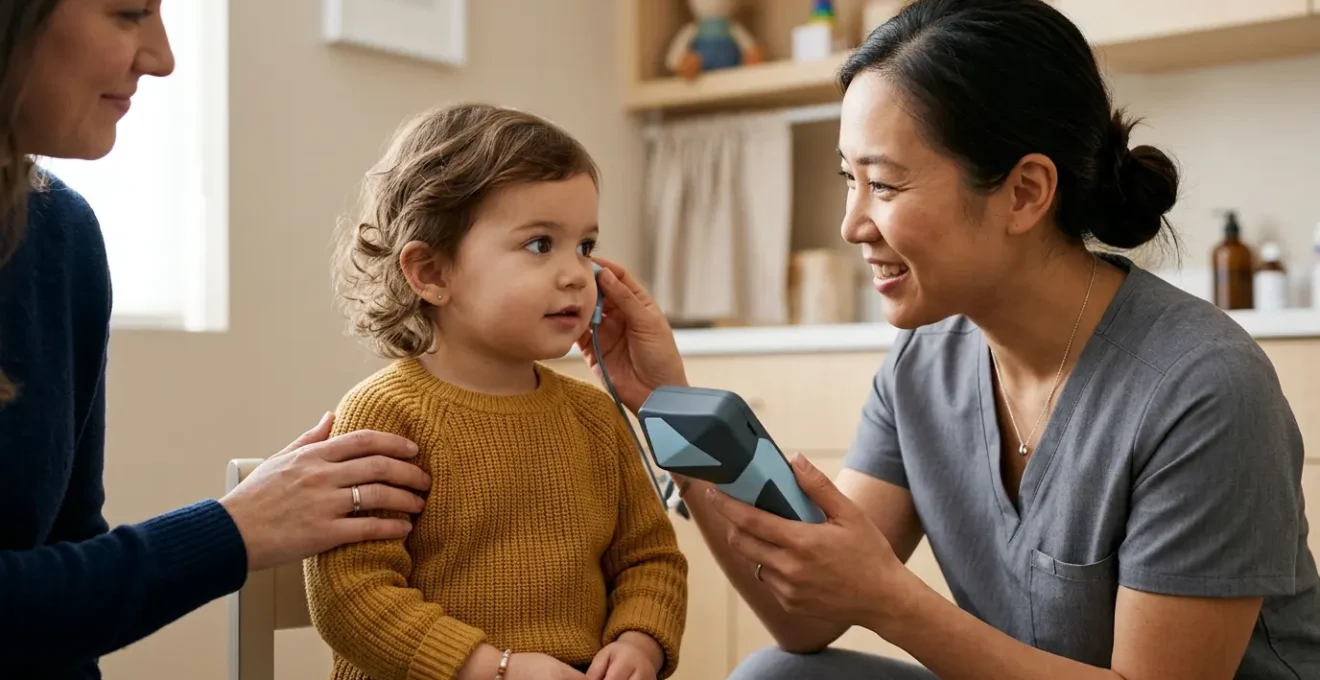
The common belief that « my baby seems fine » overlooks the silent sensory issues that can quietly sabotage future academic success.
- Vision and hearing are the foundational building blocks for all learning; minor, invisible deficits in infancy can lead to major learning disabilities later.
- Routine screenings are not just « checks » but essential inspections of this « sensory foundation, » identifying issues long before they become obvious problems.
Recommendation: Treat screenings as non-negotiable preventative care. Acting on subtle signs early, rather than « waiting to see, » is the most effective way to protect your child’s developmental trajectory.
As a parent, you are the world’s foremost expert on your child. You celebrate every new gurgle, every clumsy reach for a toy, and every wide-eyed look of discovery. In these moments, it’s natural to believe that if something were wrong with their vision or hearing, you would be the first to know. The assumption is that significant problems come with obvious signs—a baby who doesn’t react to loud noises or an eye that clearly wanders. This line of thinking leads many well-meaning parents to view routine screenings as optional, especially when their baby « seems perfectly fine. »
But what if the most significant threats to your child’s future learning are completely silent? The ability to read, write, and even socialize doesn’t magically appear in preschool. It is meticulously built, brick by brick, on a sensory foundation of clear vision and accurate hearing. From the moment they are born, babies are data-gathering machines, and this sensory information shapes the very architecture of their developing brains. A slight blurriness they can’t describe or a high-frequency sound they consistently miss are not just minor glitches; they are cracks in that foundation.
This is where the paradigm must shift. Routine screenings are not merely a hunt for obvious defects; they are a structural engineer’s inspection of that invisible foundation. They use specialized tools to detect subtle weaknesses that a parent’s loving eye cannot. This guide, from the perspective of a developmental pediatrician, will show you why the « wait and see » approach is a gamble with your child’s future. We will explore why correcting a lazy eye before age 7 is a race against time, how to spot hearing loss in a baby who still babbles, and how to access critical support services without delay, ensuring your child’s path to learning is built on solid ground.
To help you navigate these crucial early years, this article provides a structured overview of the most critical screening topics. You’ll find detailed explanations on why early and consistent checks are the best tool for preventing long-term learning challenges.
Summary: A Parent’s Guide to Proactive Pediatric Screenings
- Why Correcting Lazy Eye Before Age 7 Is Critical for Vision Depth?
- How to Spot Hearing Loss Signs in a Baby Who Babbles?
- Clicks or Asymmetry: What to Look for in Your Baby’s Leg Folds?
- The « Wait and See » Error That Makes Speech Therapy Harder
- How to Prepare Your Toddler for Their First Eye Exam?
- Why Being in the 15th Percentile Is Normal if the Curve Is Steady?
- Why Early Exposure to Words Predicts Academic Success at Age 9?
- Developmental Delays: How to Access Early Intervention Services Without Waiting Months?
Why Correcting Lazy Eye Before Age 7 Is Critical for Vision Depth?
One of the most misunderstood vision issues is amblyopia, or « lazy eye. » It isn’t a problem with the eye itself, but with the brain connection to that eye. When one eye sends a blurry or incorrect image to the brain, the brain starts to ignore it, relying solely on the « good » eye. To a parent, the child may seem to see perfectly fine, navigating their world without bumping into things. They are compensating, but at a tremendous cost: the loss of stereoscopic vision, or depth perception.
This is not a cosmetic issue; it’s a neurological one. Without depth perception, a child struggles to judge distances, which can affect everything from catching a ball to later learning to drive. The brain’s ability to build these strong neural pathways for vision is at its peak during early childhood. This period of high adaptability is known as the neuroplasticity window. After this window starts to close, rewiring the brain becomes significantly harder.
This is why early screening is non-negotiable. Research confirms that the opportunity for correction is time-sensitive. According to Mayo Clinic research, the best treatment results for amblyopia occur before age 7. While some response is possible in older children, the success rate drops significantly. Treatment, often as simple as patching the stronger eye, forces the brain to start using and strengthening the connection to the weaker eye. Waiting until a child is in school and struggling to read the board means you have missed the most effective period for intervention.
How to Spot Hearing Loss Signs in a Baby Who Babbles?
« But my baby babbles and coos, so their hearing must be fine. » This is a common and dangerous misconception. Many parents associate hearing loss with silence, but the reality is far more nuanced. A baby might startle at a loud door slam but miss the subtle, high-frequency consonants of speech like ‘s’ or ‘f’. This partial hearing loss is a classic « silent issue » that routine screenings are designed to catch.
Recent research shows that 2-3 infants per 1,000 live births in the United States are born with a detectable hearing loss in one or both ears. Crucially, babbling is not solely a response to external sounds; it’s also driven by a baby’s ability to hear themselves. This is called the auditory feedback loop. They make a sound, hear it, and are motivated to experiment further. A baby with mild to moderate hearing loss may still babble, but the range and complexity of their sounds may not progress. They might get stuck on vowel sounds (« ahhh, » « oooo ») without advancing to canonical babbling with consonants (« ba-ba, » « da-da »). This is a subtle red flag that is easily missed without a baseline hearing screen.
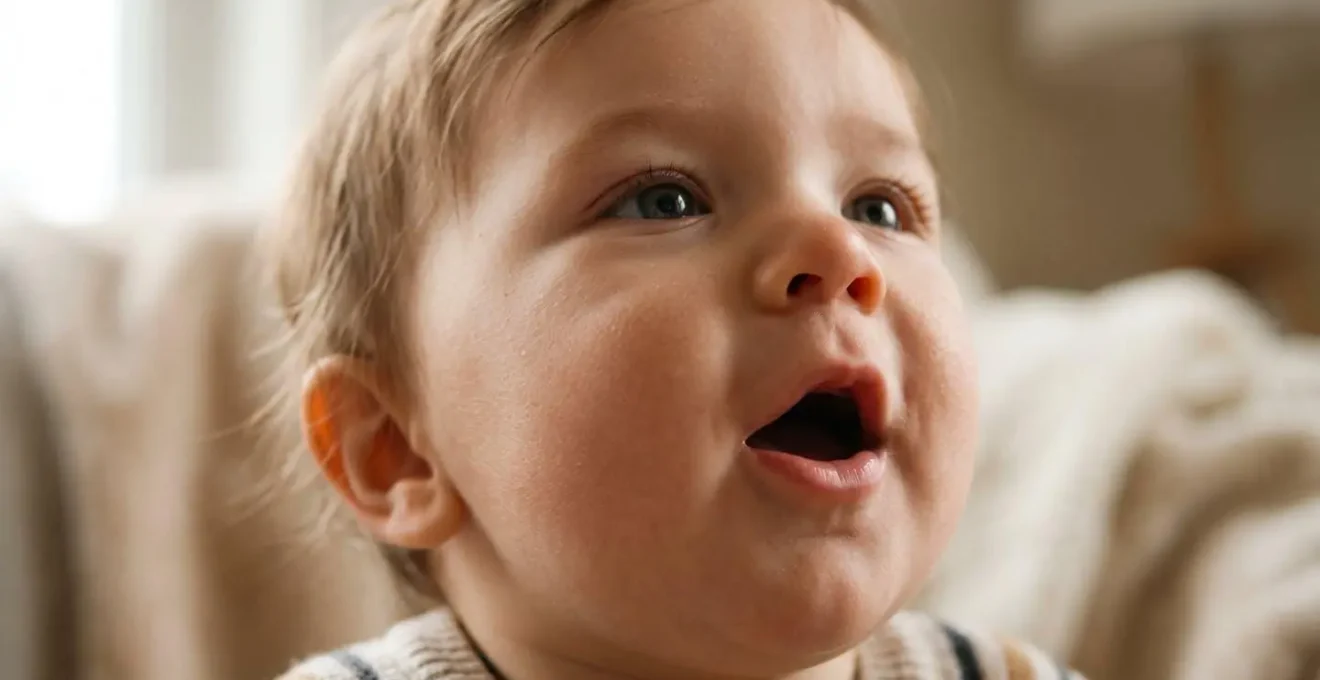
Research from the University of Missouri powerfully illustrates this point. A study on infants with profound hearing loss found that once they received cochlear implants, their vocalizations caught up to those of their hearing peers within just four months. This shows that the motivation to vocalize is directly tied to the ability to hear. A screening doesn’t just check if a baby can hear, it checks if they can hear well enough to build the foundations for language.
Clicks or Asymmetry: What to Look for in Your Baby’s Leg Folds?
During a well-child visit, your pediatrician will perform a specific set of hip maneuvers, gently rotating your baby’s legs. This isn’t just a casual check; it’s a screen for Developmental Dysplasia of the Hip (DDH), a condition where the hip joint’s « ball and socket » are not properly formed. If left untreated, DDH can lead to a limp, pain, and early arthritis.
Parents can also be active partners in detection. The most common signs you can look for at home during diaper changes are asymmetry. Are the creases on the back of your baby’s thighs uneven? Does one leg appear slightly shorter or turn outward more than the other? You might also feel or hear a « click » or « clunk » during movement, though this is not always present. It’s crucial to understand that the absence of these signs does not guarantee the hips are normal.
This is another area where « silent issues » are prevalent. The American Academy of Pediatrics reports that while 1-2% of full-term infants have clinically obvious hip instability, up to 15% show some instability on an ultrasound. This means many cases are not detectable by physical exam alone. This is why a pediatrician might refer for an ultrasound even if the physical exam seems normal, especially if risk factors like being female, firstborn, or in a breech position are present. Early detection, often before 6 months, allows for treatment with a simple, soft brace (like a Pavlik harness) which is highly effective. Waiting until a child is walking and has a noticeable limp often requires more invasive surgeries and complex recoveries.
The « Wait and See » Error That Makes Speech Therapy Harder
When a toddler isn’t talking as much as their peers, it’s tempting for family and friends to offer the reassuring advice: « Don’t worry, they’ll talk when they’re ready. Einstein didn’t talk until he was four! » This « wait and see » approach is one of the most common—and potentially harmful—mistakes in early childhood development. While every child develops at their own pace, there are established milestones for a reason. They are indicators that the underlying sensory and cognitive wiring for language is developing correctly.
Delaying evaluation for a speech delay means losing precious time in that critical neuroplasticity window when the brain is most receptive to building language pathways. Early intervention services, provided before age 3, are designed to work with the brain during this peak period of development. As experts have noted, the benefits of acting swiftly are significant.
Early intervention (services provided before age 3) often result in faster or greater progress than services provided later on.
– Peacock et al., Early Intervention Research Study, 2017
The consequences of waiting are not just a delay in talking; they can cascade into future academic and social challenges. Stuttering, for example, is a condition where early intervention has a dramatic impact. Research demonstrates that more than 80% of children who receive early intervention for stuttering overcome it before their teen years. Waiting for a child to « grow out of it » can entrench the pattern, making therapy longer and more difficult, and potentially leading to social anxiety. A speech screening isn’t a judgment; it’s a tool to determine if support is needed to get your child on the right track.
How to Prepare Your Toddler for Their First Eye Exam?
The idea of an eye exam for a pre-verbal toddler can seem daunting. How can they possibly read an eye chart? The good news is that pediatric ophthalmologists and optometrists are experts at turning examinations into a game. They use lights, pictures, and special tools that don’t require any verbal feedback from your child. However, you can play a crucial role in preparing them for a successful, stress-free visit.
First, normalize the experience through play. You can « play eye doctor » at home. Use a toy flashlight to look at a doll’s eyes, or practice covering one eye with your hand in a game of « pirate. » Talk about the doctor in a positive, upbeat way, explaining that they will « look at your eyes with a special light to make sure you can see all your toys clearly. » Timing is also key. Schedule the appointment for a time when your toddler is typically well-rested and fed, avoiding their usual naptime.
Understanding the screening timeline also helps manage expectations. A formal vision screening is not about passing or failing but about gathering information. The American Academy of Ophthalmology provides clear guidelines for when different types of testing are appropriate:
- Photoscreening and handheld autorefraction can be used in children from 12 months to 3 years to detect risk factors.
- Formal visual acuity testing (using charts with pictures or letters) should begin when a child is cooperative, usually between ages 3.5 and 4 years.
- It is essential for a child to have formal visual acuity testing by age 5.
- Any child who cannot cooperate or who fails a screening should be referred for a comprehensive eye evaluation by an eye care professional.
This proactive approach ensures that issues like amblyopia or the need for glasses are identified and managed during the most effective treatment window, setting the stage for success in school.
Why Being in the 15th Percentile Is Normal if the Curve Is Steady?
Growth charts and percentiles can be a major source of anxiety for parents. Hearing that your child is in the 15th percentile for weight or height can sound alarming, as if they are « failing » or falling behind. This is where it’s vital to understand what percentiles truly represent. A percentile is not a grade; it’s a comparison. Being in the 15th percentile simply means that in a room of 100 children their age, your child is bigger than 15 of them and smaller than 85.
As a pediatrician, I am far less concerned with the specific number than I am with the developmental trajectory. Is your child consistently following their own curve? A child who has always tracked along the 15th percentile is demonstrating a healthy, steady pattern of growth for their body. This is completely normal. The red flag for a pediatrician is a sudden drop across two or more percentile lines—for example, a child who was consistently at the 50th percentile and has now fallen to the 10th. This indicates a change in their growth pattern that needs investigation.
This same principle of « steady trajectory » versus « single data point » applies to all areas of development. It also highlights how a child’s own perception of « normal » can be misleading, a point raised by the Beaumont Pediatric Center, which notes, « Many parents are surprised to learn that vision and hearing difficulties often go unnoticed in the early stages. A child may think their blurry vision is normal. » Just as a child on a lower growth curve has no idea they are « small, » a child with a slight hearing or vision deficit assumes everyone experiences the world the way they do. They don’t know what they’re missing, which is why objective screening is the only way to establish a true baseline.
Why Early Exposure to Words Predicts Academic Success at Age 9?
The connection between a child’s early language environment and their later academic success is one of the most well-documented findings in developmental science. The « 30 million word gap » study famously showed that children from higher-income families hear millions more words by age 3 than their lower-income peers, and that this gap correlates directly with later IQ and school performance. This isn’t about using flashcards with a baby; it’s about creating a rich, interactive language environment through talking, singing, and reading.
But this entire process hinges on one critical, often-overlooked factor: the child’s ability to clearly hear the words being spoken. The sensory foundation of hearing is the bedrock upon which all language and literacy are built. If a child has undiagnosed mild hearing loss, they may miss the quiet endings of words or the subtle differences between sounds like « p » and « b. » To them, the stream of language can sound muffled or distorted. They miss out on thousands of daily opportunities to absorb vocabulary and syntax.
This early deficit doesn’t just stay in early childhood; it snowballs. By the time the child enters school, they may have a smaller vocabulary and weaker phonological awareness (the ability to recognize and work with sounds), which are the primary predictors of reading ability. Unsurprisingly, data highlights that children with speech and language difficulties are 3-4 times more likely to face reading challenges compared to their peers. A simple hearing screening in infancy is the first and most critical step in ensuring a child has open access to the world of words that will shape their academic future. It protects their ability to benefit from the rich language environment you provide.
Key Takeaways
- Your child’s perception is not a reliable indicator; they assume their way of seeing and hearing is « normal, » even if it’s deficient.
- The brain’s ability to correct sensory issues (neuroplasticity) is highest before ages 3-7, making early intervention far more effective than later remediation.
- Consistent growth along a specific percentile curve is more important than the percentile number itself. A sudden drop is the real red flag.
Developmental Delays: How to Access Early Intervention Services Without Waiting Months?
If a screening or your own observation raises a concern about a potential developmental delay, the next step can feel overwhelming. You may hear stories about long waiting lists for evaluations and services, causing anxiety and a feeling of helplessness. However, you have the power to be a proactive advocate for your child and can often access support much faster than you think.
In the United States, every state has a publicly funded Early Intervention (EI) program for children from birth to age 3, mandated under Part C of the Individuals with Disabilities Education Act (IDEA). These services are designed to address developmental delays in areas like speech, motor skills, or social interaction. Crucially, in many states, you do not need a doctor’s referral to request an evaluation. You can contact your state’s program directly.
Once you make contact, a process is initiated to determine eligibility, which often moves quickly. If your child is found eligible, a team will work with you to create an Individualized Family Service Plan (IFSP), which outlines specific goals and the services needed to meet them, often at little to no cost to your family. If the public system has a waitlist or if you want a second opinion, seeking a private evaluation from a licensed therapist (like a speech-language pathologist or physical therapist) is another effective route. While this may have an associated cost, it can provide immediate answers and a plan of action.
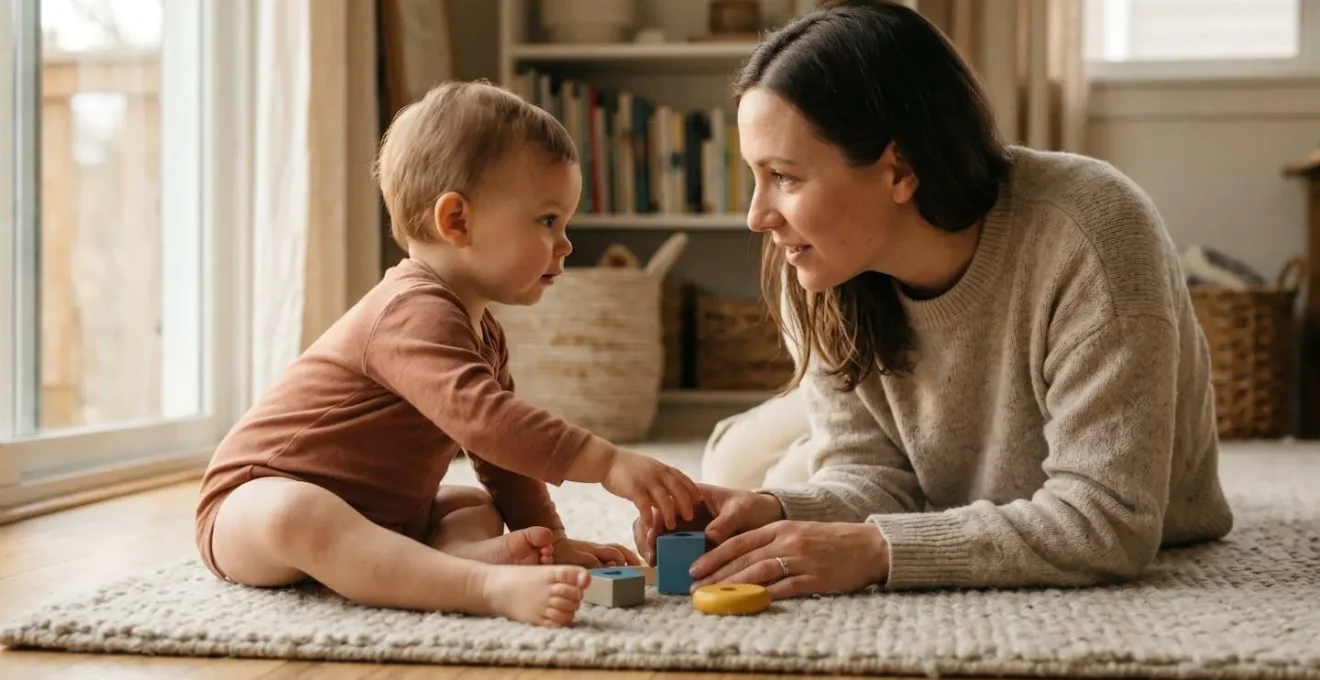
Your Action Plan: Accessing Early Intervention Services Quickly
- Direct Contact: Contact your state’s early intervention program directly through the Department of Health or Education. In many states, you can self-refer without waiting for a doctor’s order.
- Request Assessment: Formally request a multidisciplinary team assessment to determine your child’s eligibility based on developmental delays or a diagnosed condition.
- Private Evaluation: If you need faster access or the public system is slow, simultaneously seek a private evaluation from a licensed speech-language pathologist or other relevant therapist.
- Confirm Services: Once eligibility is confirmed, services can begin quickly. These are often provided at low or no cost and can take place in your home or another natural environment.
- Develop the Plan: Actively participate in the creation of an Individualized Family Service Plan (IFSP), which legally outlines your child’s goals and the services the state will provide.
Your proactive partnership is the most powerful tool in your child’s development. Do not dismiss your parental intuition, but also do not dismiss the objective data from screenings. Schedule these routine checks, ask questions, and if a concern is raised, act swiftly. You are giving your child the clear sensory foundation they need for a lifetime of successful learning.