
Contrary to the rush of standard procedures, separating a newborn for weighing or swaddling in the first hour actively disrupts their transition to life; skin-to-skin contact is not a ‘nice-to-have’ but a critical biological necessity for physiological stabilization.
- The parent’s chest is a live, responsive incubator that intelligently regulates the baby’s temperature, heart rate, and breathing in a way a blanket cannot.
- This contact triggers a powerful neurochemical cocktail in both parent and baby, reducing infant stress by over 170% and laying the foundation for bonding and successful breastfeeding.
Recommendation: Insist in your birth plan on an uninterrupted « Golden Hour » of skin-to-skin contact immediately after delivery, delaying all non-urgent procedures.
The moment arrives. After months of waiting, your baby is here, wet and wondrous, taking their first gulp of air. In the whirlwind that follows, a well-meaning nurse might suggest, « Let’s just get baby cleaned up and weighed, then we’ll wrap them up warmly. » It sounds logical. It’s what has been done for decades. We’ve been taught that a tightly wrapped swaddle is the epitome of a calm, secure baby. This is the standard procedure in many hospitals—a quick separation for metrics and management.
But as a neonatal nurse who has spent years witnessing the profound moments after birth, I must tell you: this routine is a missed opportunity of monumental importance. We often focus on tools and techniques, like swaddling, to manage a baby. But what if the most powerful, intelligent, and effective tool is not a product, but a process? What if the key to a smooth transition from womb to world isn’t a blanket, but your own body? The first hour of life is a unique, non-repeatable window for a critical biological dialogue between you and your child. It’s a period of intense physiological programming where your touch does more than comfort—it teaches your baby’s body how to live.
This article will dismantle the outdated notion that separation in the first hour is harmless. We will explore the powerful science behind skin-to-skin contact, demonstrating why your chest is a more effective regulator than any swaddle. We’ll examine the hormonal cascade that kickstarts milk production, see how this practice is adapted for the most fragile infants, and understand why it’s just as crucial for fathers. We’ll also address the very real safety concerns that come with this intimate contact and empower you with the knowledge to build a support system that protects this sacred Golden Hour. It’s time to reclaim that first hour, not as a period of medical procedure, but as the foundational act of parenting.
This guide unpacks the science and practical steps for prioritizing this critical practice. Explore the sections below to understand why skin-to-skin contact is a non-negotiable part of a healthy start.
Summary: The Undeniable Power of Skin-to-Skin Contact in the First Hour
- Why Oxytocin Release During Skin-to-Skin Boosts Milk Production?
- How to Perform Kangaroo Care Safely with a Preemie in the NICU?
- Dad or Mom: Does Skin-to-Skin Have the Same Effect with the Father?
- The Co-Sleeping Mistake Parents Make During Skin-to-Skin on the Sofa
- When to Use Skin-to-Skin to Warm a Cold Baby Instead of More Layers?
- Liquid Gold: Why Colostrum Is More Potent Than Antibiotics for Newborns?
- Why Swaddling Tightly Is Key to Calming the Startle Reflex?
- Building a Breastfeeding Support System: How Partners Can Help Increase Success Rates by 40%?
Why Oxytocin Release During Skin-to-Skin Boosts Milk Production?
The link between holding your baby close and successfully breastfeeding is not just emotional; it is deeply hormonal. When your newborn is placed skin-to-skin on your chest, their tiny hands begin to knead your breast, and they may start to nuzzle and lick. These seemingly small actions are powerful triggers, sending signals to your brain to release a cascade of hormones, with oxytocin at the forefront. Often called the « love hormone, » oxytocin is the key that unlocks your milk supply.
This hormone has a dual function in breastfeeding. First, it triggers the « let-down reflex, » causing the muscles around your milk-producing cells to contract and eject milk for your baby. Without oxytocin, the milk stays put, no matter how much is there. As Kerstin Uvnäs-Moberg and her colleagues noted in their systematic review for PLOS One, « oxytocin is released in response to skin-to-skin contact and breastfeeding to cause milk ejection and to promote milk production. » This means the contact itself starts the process before the baby even latches.
Secondly, frequent oxytocin release tells your body to continue producing prolactin, the hormone responsible for milk synthesis. More skin-to-skin contact leads to more oxytocin, which in turn establishes a more robust and responsive milk supply. The data is clear: a 2025 Cochrane review analyzing 69 trials found that 75% of babies receiving early skin-to-skin contact were breastfeeding exclusively at 1 month, compared to just 55% of those who did not. This isn’t a minor improvement; it’s a significant boost, proving that skin-to-skin is not just a comforting practice but a foundational component of breastfeeding success.
How to Perform Kangaroo Care Safely with a Preemie in the NICU?
For parents of a premature infant, the Neonatal Intensive Care Unit (NICU) can feel like an intimidating world of machines and monitors. The instinct to hold and comfort your baby is often met with the reality of their fragility. However, Kangaroo Care, the clinical term for skin-to-skin contact, is not a luxury in the NICU; it is a powerful, evidence-based medical intervention. It transforms the parent from a worried bystander into an active participant in their baby’s care, creating a living incubator that is often superior to the mechanical one.
The safety of the procedure is paramount. NICU staff will guide you, but the core principles involve placing your baby, wearing only a diaper and hat, in a vertical position on your bare chest. Their head should be turned to the side with their airway clear and visible at all times. This position mimics the womb and provides a stable, warm, and comforting environment. The medical data strongly supports this practice. A 2022 meta-analysis found that the mean respiratory rate of preterm infants receiving kangaroo care was 3.50 breaths/minute lower than those in standard incubator care, indicating less stress and more stable breathing patterns.
Your baby will remain connected to monitors, allowing the nursing staff to track their heart rate, oxygen saturation, and breathing, ensuring the experience is both therapeutic and safe. The benefits extend far beyond immediate stabilization.

This monitored yet intimate contact provides a crucial sensory blueprint for the developing brain. The consistent sound of your heartbeat, the rhythm of your breathing, and your unique scent create a multisensory environment that promotes neurological organization and reduces stress.
Stanford Study: Kangaroo Care and Enhanced Neurodevelopment
The long-term impact is profound. A landmark 2024 Stanford study of 181 very premature infants revealed a direct link between the amount of skin-to-skin contact and cognitive outcomes. The researchers found that preemies who received more kangaroo care had significantly higher cognitive scores at 12 months and were less likely to be developmentally delayed, even after accounting for other medical and social factors. This demonstrates that skin-to-skin is not just about warmth; it’s about building a healthier brain.
Dad or Mom: Does Skin-to-Skin Have the Same Effect with the Father?
The image of a newborn on a mother’s chest is iconic, but the power of skin-to-skin is not exclusive to mothers. When a father or partner holds their baby skin-to-skin, they become a vital part of the physiological programming process. While they don’t produce milk, they offer the same life-sustaining benefits of warmth, stability, and security. The baby, cradled on their chest, recognizes the same core elements of safety: a steady heartbeat, the warm skin, and the gentle rise and fall of breathing.
This practice is a game-changer for paternal bonding. It moves the father from a supporting role to a central figure in the newborn’s world. This isn’t just a feeling; it’s backed by hormonal science. While mothers are flooded with oxytocin, fathers experience a surge in vasopressin, a related hormone. As one research synthesis explains, « Vasopressin…fosters commitment. When dad lives with baby and mom, vasopressin causes his brain to be reorganized toward paternal behaviors. It helps him recognize his own family and bond with his baby. » Skin-to-skin contact is a primary trigger for this hormonal shift.
Vasopressin is also known as the monogamy hormone; it fosters commitment. When dad lives with baby and mom, vasopressin causes his brain to be reorganized toward paternal behaviors. It helps him recognize his own family and bond with his baby
– Research synthesis on paternal hormones, Fatherhood: A Father’s love, Pathways to Family Wellness
The impact on the father-infant relationship is measurable. A 2017 randomized controlled trial with new fathers provided clear evidence. It demonstrated that fathers receiving daily skin-to-skin contact for at least 15 minutes showed significantly higher attachment scores in all measured categories, including exploring, touching, caring, and talking to their infant. For the baby, the benefits are equally clear: their heart rate, temperature, and breathing stabilize just as effectively on a father’s chest as on a mother’s. It provides a crucial opportunity for the mother to rest and recover, knowing her baby is in the safest place possible—next to her partner’s heart.
The Co-Sleeping Mistake Parents Make During Skin-to-Skin on the Sofa
The profound relaxation induced by skin-to-skin contact is one of its greatest benefits, but also its greatest risk if not managed properly. The surge of oxytocin doesn’t just calm the baby; it calms the parent, too. When you combine this powerful hormonal sedative with the sheer exhaustion of childbirth and new parenthood, falling asleep becomes almost inevitable. As La Leche League International wisely notes, « the combination of post-partum exhaustion and the massive oxytocin release during skin-to-skin creates a powerful neurochemical cocktail that makes falling asleep almost unavoidable. »
This is where a common and dangerous mistake occurs: conducting skin-to-skin sessions on a sofa or couch. A sofa, with its soft cushions, gaps, and lack of support, is one of the most hazardous places for a newborn. If the parent dozes off, the baby can easily slip into a position that obstructs their airway, or become wedged between the parent and a cushion, leading to a risk of suffocation. This is not co-sleeping; it is accidental and unsafe co-sleeping in a high-risk environment. A sofa is designed for sitting, not for safe sleep.
The solution is not to avoid skin-to-skin, but to create a protected environment for it. This means being intentional about your setup and acknowledging the very real possibility of falling asleep. It requires planning and, most importantly, a « safety spotter »—another alert adult who can monitor both you and the baby.
Your Action Plan: Safe Skin-to-Skin Setup
- Choose Your Position Wisely: Position yourself in a recliner (not a sofa or bed) with firm back support to prevent sliding or positional shifts that could obstruct the baby’s airway.
- Ensure Airway Visibility: Ensure the baby is positioned vertically with their head turned to one side, nose and mouth completely visible and unobstructed by breast tissue or clothing.
- Designate a Safety Spotter: Designate a partner, friend, or family member as a ‘safety spotter’ who remains awake and actively monitors both parent and baby throughout the session.
- Stay Alert or Hand Off: Plan for sessions of at least 60 minutes but remain vigilant. If you feel drowsy, have your spotter take the baby or place them in their designated safe sleep space (like a bassinet).
- Avoid Hazardous Surfaces: Never perform skin-to-skin on sofas, couches, or any surface with soft cushions, gaps, or inclines that create entrapment or asphyxiation risks.
- Prepare for the Session: Pump milk if needed and use the toilet before starting to minimize the need to move with the baby on your chest, reducing the risk of falls or jostling.
When to Use Skin-to-Skin to Warm a Cold Baby Instead of More Layers?
A newborn’s primary challenge after birth is thermoregulation—the ability to maintain a stable body temperature. Their relatively large surface area and lack of insulating body fat make them susceptible to getting cold quickly. The common instinct is to bundle them in more layers or blankets. While this provides passive insulation, it’s an inefficient solution compared to the active, intelligent warmth provided by skin-to-skin contact. Your chest is not just a warm surface; it’s a biological thermostat.
This remarkable phenomenon, known as maternal-infant thermal synchrony, is a perfect example of the « biological dialogue » in action. When a cold baby is placed on your chest, nerve endings in your skin detect the temperature difference. Your brain responds by increasing blood flow to your chest, raising its surface temperature to transfer heat directly to your baby. Research shows that a mother’s chest can increase its temperature by up to 2°C to warm a cold baby. Conversely, if the baby is too warm, your chest can cool by 1°C to help them shed excess heat.
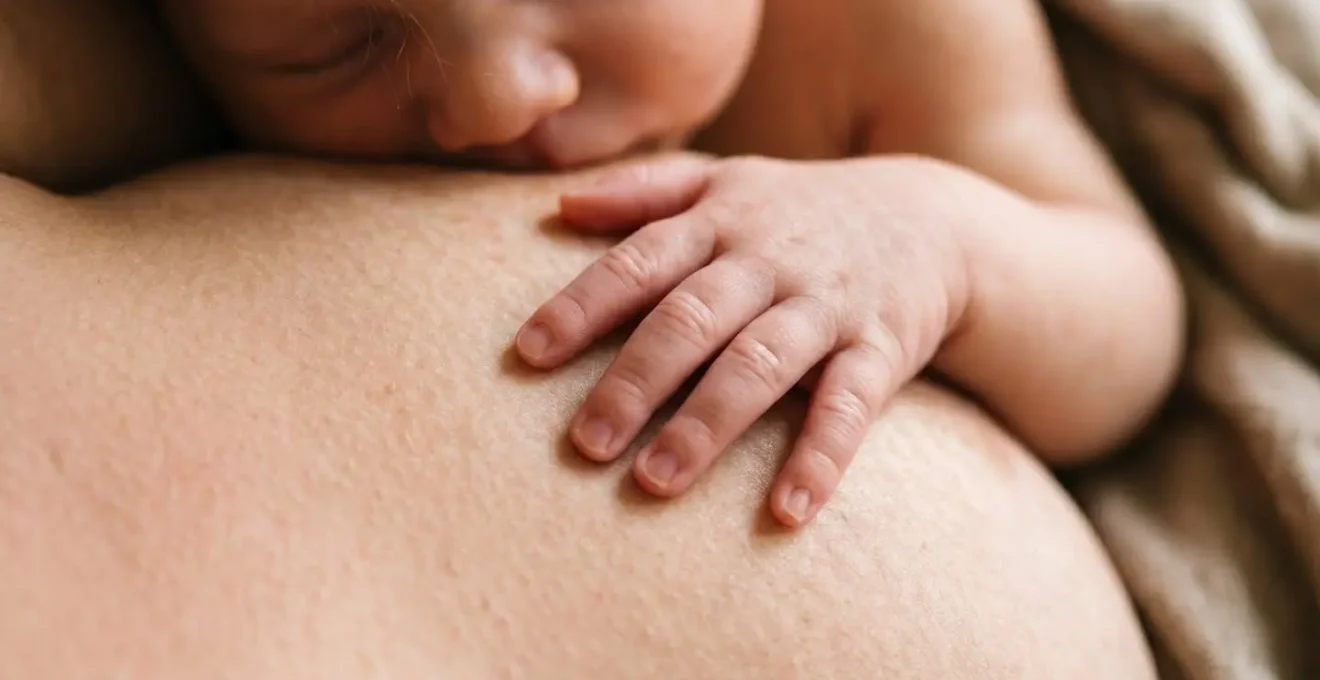
So, when should you use skin-to-skin instead of more layers? The answer is: almost always, as the first-line response. If you notice your baby’s hands or feet feel cool, or they seem a bit unsettled, the most effective and efficient way to warm them is to place them on your bare chest with a light blanket over both of you. A swaddle or extra clothing merely traps the baby’s own body heat. Skin-to-skin is an active heat transfer from a powerful, regulated source. It not only warms your baby more effectively but does so while also regulating their heart rate, breathing, and blood sugar, and releasing calming hormones for both of you—a feat a simple blanket could never accomplish.
Liquid Gold: Why Colostrum Is More Potent Than Antibiotics for Newborns?
In the first hours and days after birth, before your mature milk comes in, your breasts produce colostrum. This thick, yellowish fluid, often called « liquid gold, » is the most important first meal your baby will ever have. While the volume is small—sometimes just a few drops per feeding—its potency is immense. Colostrum is less a food and more a living tissue, a highly concentrated dose of immunity tailored specifically for your newborn, far more powerful and appropriate than any synthetic antibiotic.
Each drop is packed with millions of live white blood cells, antibodies (especially secretory IgA), and other immune factors that have been passed from you to your baby. The secretory IgA coats your baby’s intestinal lining, creating a protective barrier that prevents harmful pathogens from entering their system. This is your baby’s first, crucial immunization. Skin-to-skin contact is the delivery system for this potent medicine. It calms the baby, stimulates their rooting reflex, and allows them easy access to the breast to get these vital drops. The act of separating a baby for procedures in the first hour can delay or disrupt this first critical feeding.
The stress of separation itself is a major factor. Research has found that when babies are separated from their mothers, their autonomic activity averages 176% higher and their quiet sleep is 86% lower. This state of high stress is not conducive to feeding or rest. As UNICEF UK’s Baby Friendly Initiative states, « Skin-to-skin contact is important for babies and mothers to…initiate breastfeeding. The practice regulates the baby’s heart rate and breathing, helping them to better adapt to life outside the womb. » Colostrum isn’t just about nutrition; it’s about protection. Keeping your baby close ensures they receive this protection when they are most vulnerable.
Why Swaddling Tightly Is Key to Calming the Startle Reflex?
The Moro, or startle reflex, is a dramatic, involuntary response where a newborn flings their arms out, opens their hands, and then quickly brings their arms back in, often accompanied by crying. It’s a normal neurological reflex but can be disruptive, especially to sleep. Swaddling, the age-old practice of snugly wrapping a baby in a blanket, is an effective tool for managing this reflex. By keeping their arms secure, it prevents them from startling themselves awake, promoting longer, more consolidated periods of sleep. This containment mimics the snug environment of the womb, which can be very calming.
However, it is crucial to understand the context and timing. While swaddling is an excellent tool for calming the startle reflex in the weeks and months following birth, it is an inappropriate substitute for skin-to-skin contact in the Golden Hour immediately after delivery. In that first hour, the primary goal is not to suppress reflexes but to achieve profound physiological stabilization. The startle reflex is not the problem to be solved; the challenges are thermoregulation, heart rate stability, and respiratory adaptation.
A swaddle is a passive tool; it can only contain. It cannot actively warm a baby, it cannot regulate their heart rate, it cannot trigger the release of oxytocin, and it cannot stabilize blood sugar. Skin-to-skin contact actively accomplishes all of these things. As research from Karolinska Institutet confirms, infants who experience early skin-to-skin contact are better able to regulate body temperature and blood sugar levels after birth. Therefore, the answer to the question is one of priority: in the first hour, prioritize the active, life-regulating power of skin-to-skin. Once the baby is stable, calm, and has had their first feeding, then swaddling can be introduced as a wonderful strategy for promoting sleep.
Key Takeaways
- Physiological Regulation: Skin-to-skin is an active, intelligent process that stabilizes a newborn’s temperature, heart rate, and breathing more effectively than any inanimate object.
- Hormonal Advantage: The contact triggers crucial hormone releases (Oxytocin, Vasopressin) in both parents and baby, which reduces stress, promotes bonding, and is essential for establishing milk supply.
- Safety First: While profoundly beneficial, skin-to-skin requires a safe setup, especially avoiding sofas and ensuring an alert adult is present to prevent accidental suffocation.
Building a Breastfeeding Support System: How Partners Can Help Increase Success Rates by 40%?
Breastfeeding success is rarely a solo endeavor. It thrives within a supportive ecosystem, and the partner is the most critical element of that system. While the title notes a 40% increase in success rates with partner support, their role extends far beyond just encouragement. By actively participating in skin-to-skin contact, the partner becomes a direct contributor to the baby’s well-being and, consequently, breastfeeding success. When a partner takes the baby for a session of skin-to-skin, they are not « babysitting »; they are providing essential physiological regulation.
This act gives the mother a crucial window to rest, shower, or eat—all of which are vital for her recovery and milk production. A rested, hydrated, and nourished mother is far better equipped to handle the challenges of breastfeeding. The partner’s chest becomes a « safe-deposit box » for the baby, maintaining the stable, warm environment the baby needs. As pediatrician Dr. Cindy Gellner explains, this benefit is universal: « Skin-to-skin contact with either parent has been shown to stabilize a baby’s heart rate and calm them down. It makes their breathing more regular, which is important mainly in preemies who sometimes seem to forget that they have to breathe or have erratic breathing patterns. »
By taking on this role, the partner also deepens their own bond, becoming more attuned to the baby’s cues. They are more likely to understand the baby’s needs, which in turn leads to more effective co-parenting. The support system is built on these shared, tangible actions. It’s the partner bringing a water bottle during a feeding, handling a diaper change to allow for more rest, and creating that island of calm with their own body heat. This active, engaged support is what truly builds a foundation for a successful breastfeeding journey.
Your journey begins now. By understanding the profound science behind this simple act, you are equipped to advocate for your baby’s best start. Discuss an uninterrupted Golden Hour with your care provider and write it into your birth plan. This is your first and most powerful act of parenting.